Document
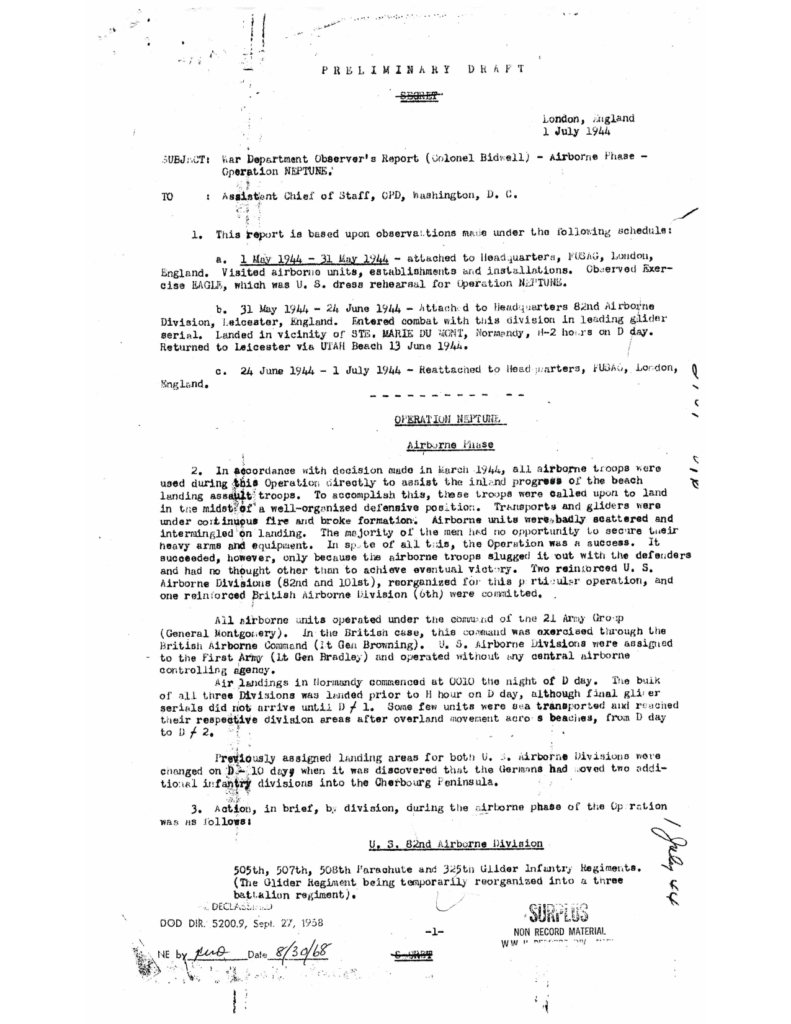
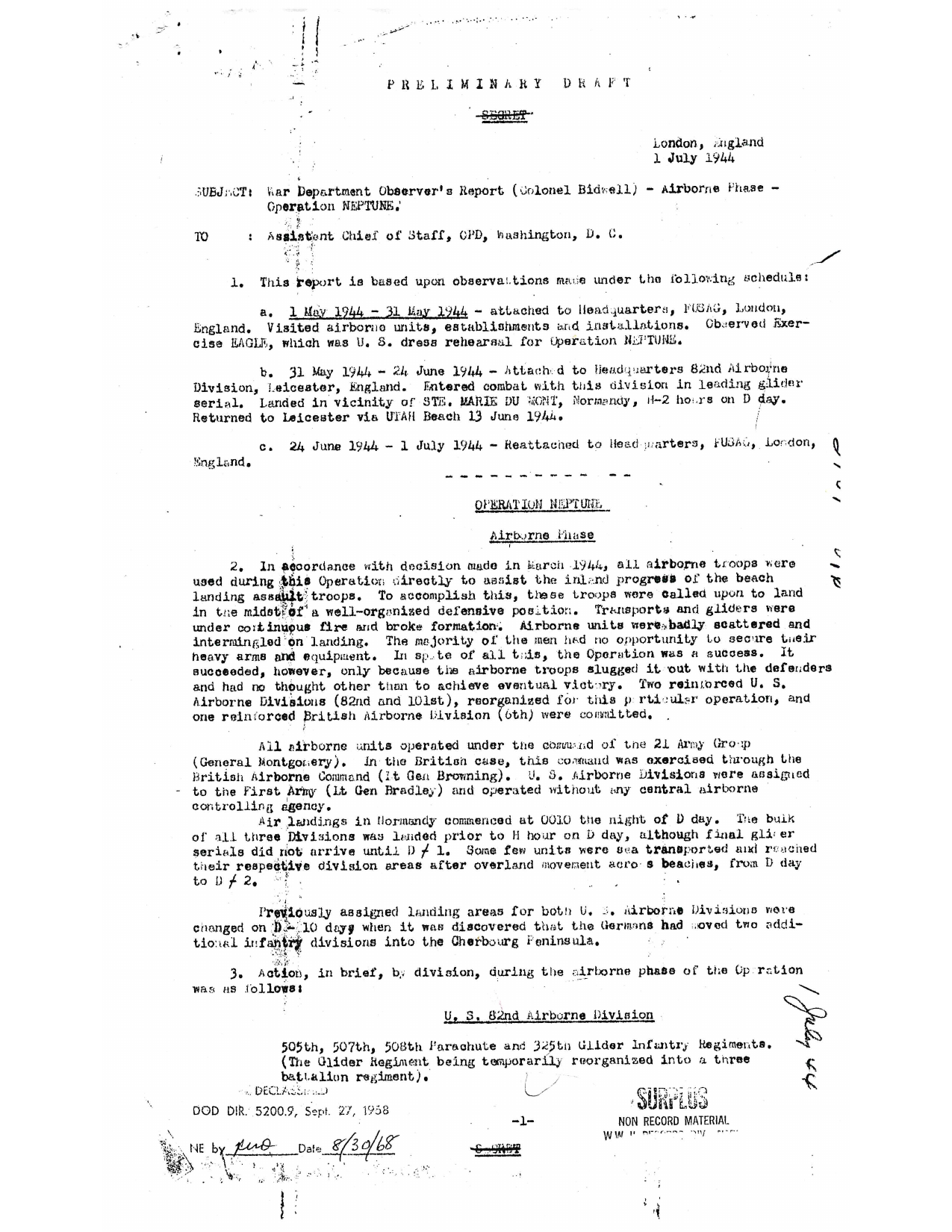
War Department Observer’s Report Evaluates American and British Airborne Operations in Normandy (1944)
Key Details
Date: July 1, 1944
Created By: Colonel Bidwell
Original or Replica: Original
Era: The General, D-Day and the Normandy Invasion
Collection: Eisenhower Presidential Library
Citations: Eisenhower Presidential Library and Museum
About
This July 1, 1944 War Department observer’s report, prepared in London less than a month after D-Day, evaluates the performance of American and British airborne forces during the Normandy invasion. Drawing on observations of the 82nd and 101st U.S. Airborne Divisions and the British 6th Airborne Division, the report examines their missions, movement plans, execution, organization, equipment, and combat effectiveness. It describes how airborne troops were assigned to seize or protect bridges, destroy enemy positions, secure important terrain, and prevent German forces from interfering with the Allied landings.
The report is especially valuable because it identifies lessons learned from the operation. It discusses problems caused by scattered parachute and glider landings, difficulties assembling units after landing, communications problems, shortages of transportation, and the challenges of supplying airborne troops. At the same time, the observer concludes that airborne soldiers generally demonstrated determination and performed effectively despite confusion and difficult conditions. The report recommends improvements in training, organization, communications, equipment, and coordination for future airborne operations. As an assessment written shortly after the invasion, the document provides teachers and students with a detailed look at how the U.S. Army evaluated D-Day airborne operations and attempted to apply those lessons to future campaigns.
Used In These Lessons & Programs
Bring History to Life
Join us for engaging learning experiences designed for young minds.