Document
Eisenhower Reviews and Expands the Forces Needed for Operations Overlord and Anvil (1944)
Key Details
Date: December 1943 - April 1944
Created By: Supreme Headquarters Allied Expeditionary Force (SHAEF)
Original or Replica: Original
Era: The General, D-Day and the Normandy Invasion
Collection: Eisenhower Presidential Library
Citations: Walter Bedell Smith Collection of World War II Documents, Box 21, Overlord-Anvil Paper (1); NAID #12009137
About
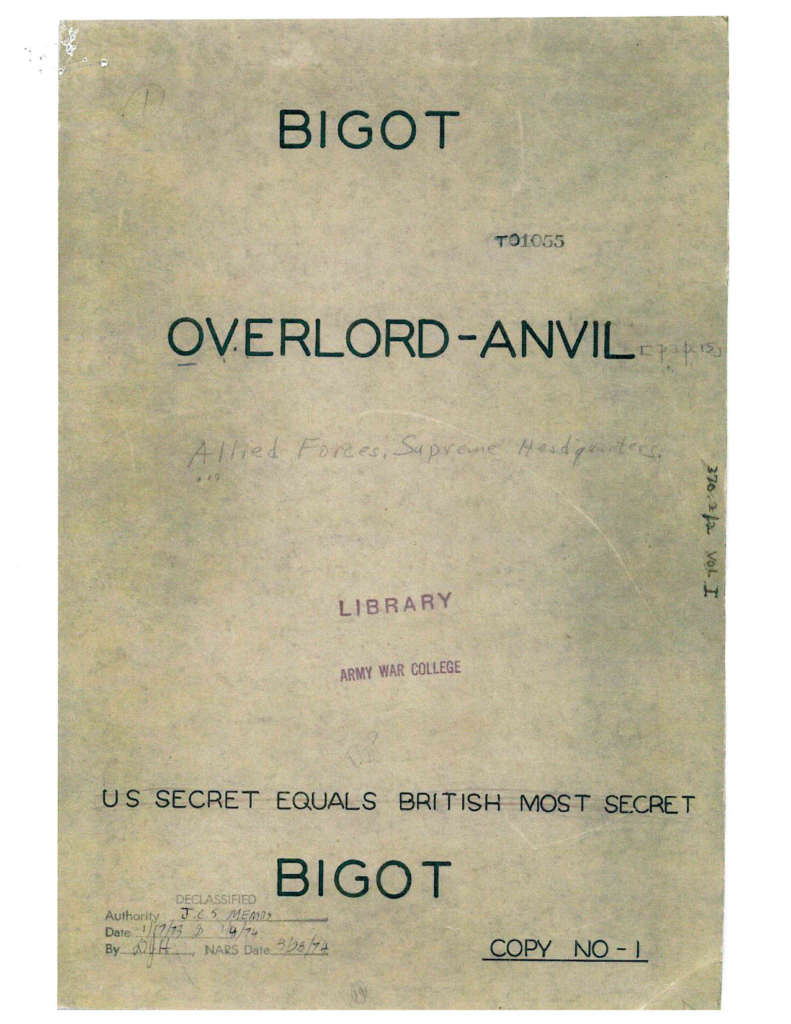
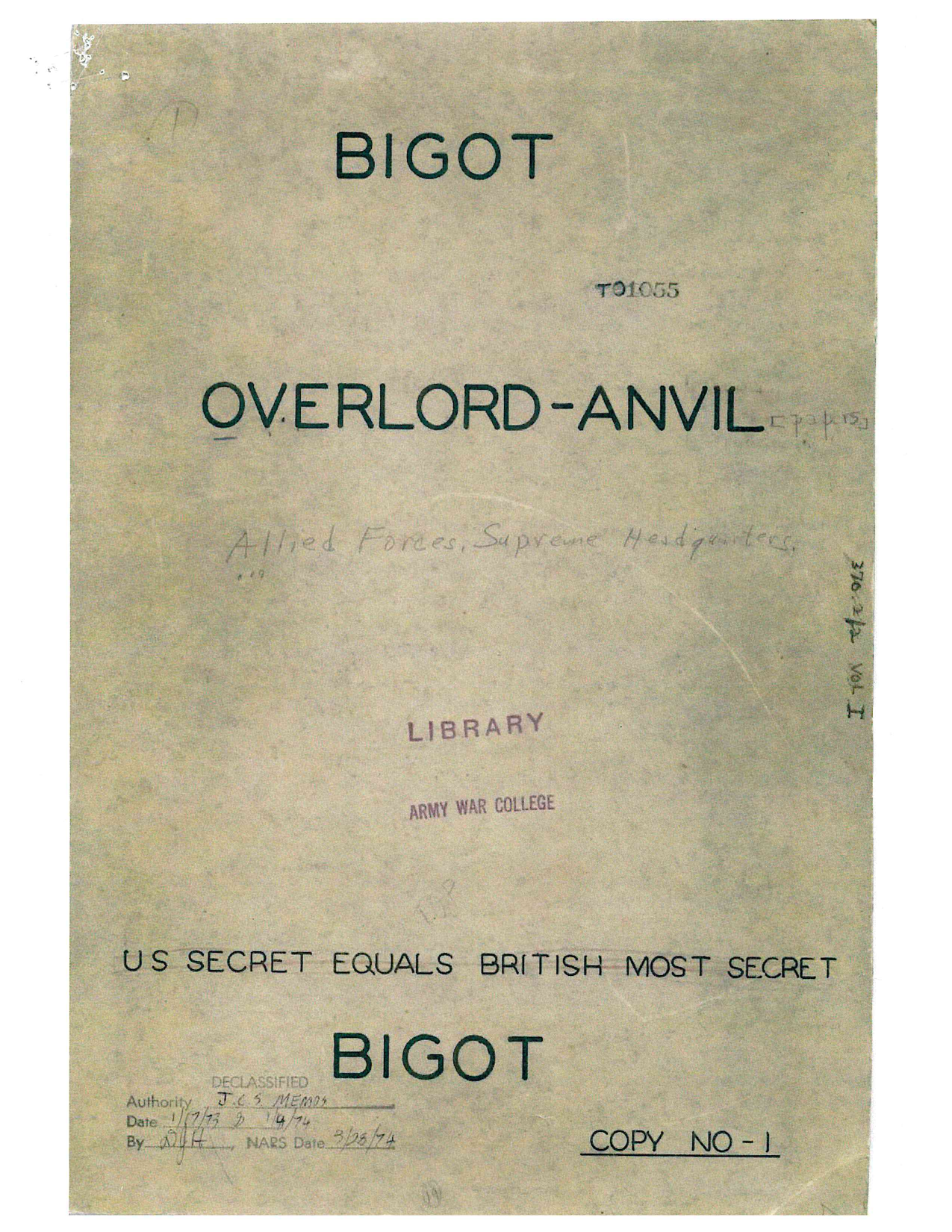
This collection of highly classified “BIGOT” messages from January 1944 documents Supreme Allied Commander **Dwight D. Eisenhower’s review of plans for Operation Overlord, the invasion of Normandy, and Operation Anvil, the proposed invasion of southern France. After examining the existing Overlord plan, Eisenhower concludes that the initial assault needed to be significantly stronger. He recommends expanding the invasion from three to five assault divisions, supported by additional airborne forces, landing craft, naval gunfire, and tactical air power. His goal was to establish a sufficiently broad and powerful foothold so German forces could not contain the invasion near the beaches.
The documents reveal the enormous logistical challenges involved in expanding Overlord. Eisenhower and his staff request detailed information about available landing craft, transport aircraft, fighter squadrons, naval forces, and other resources. Planners had to determine whether sufficient landing ships and specialized craft could be assembled without jeopardizing other Allied operations. The correspondence also considers how quickly troops and equipment could be landed after the initial assault and how naval and air forces could support the enlarged invasion.
The planning for Overlord was closely connected to Operation Anvil. Eisenhower viewed a landing in southern France as an important contribution to Overlord because it could threaten German forces from another direction and prevent them from concentrating entirely against the Normandy invasion. However, both operations competed for scarce amphibious resources, forcing Allied commanders to balance strategic ambitions against available shipping, aircraft, and manpower.
The documents provide an important behind-the-scenes look at Eisenhower’s efforts to strengthen the D-Day invasion plan and the immense logistical calculations required to turn Overlord from a strategic concept into a workable military operation.
Used In These Lessons & Programs
Bring History to Life
Join us for engaging learning experiences designed for young minds.