Document
Ethel Rosenberg Appeals Directly to Eisenhower for Clemency Days Before Her Execution (1953)
Key Details
Date: June 16, 1953
Created By: Ethel Rosenberg
Original or Replica: Original
Era: The Presidency, The Rosenberg Case
Collection: Eisenhower Presidential Library
Citations: DDE’s Records as President, Official File, Box 354, OF-101-R Amnesty-Pardons, Rosenberg, Julius and Ethel (1); NAID #12166866
About
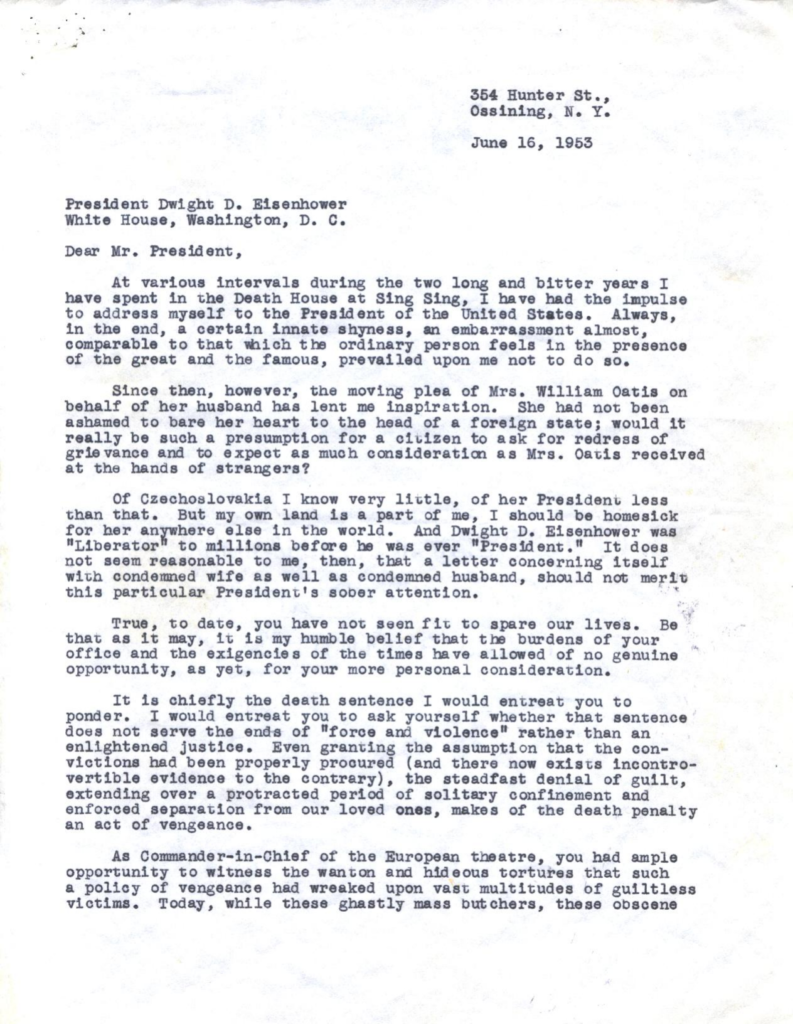
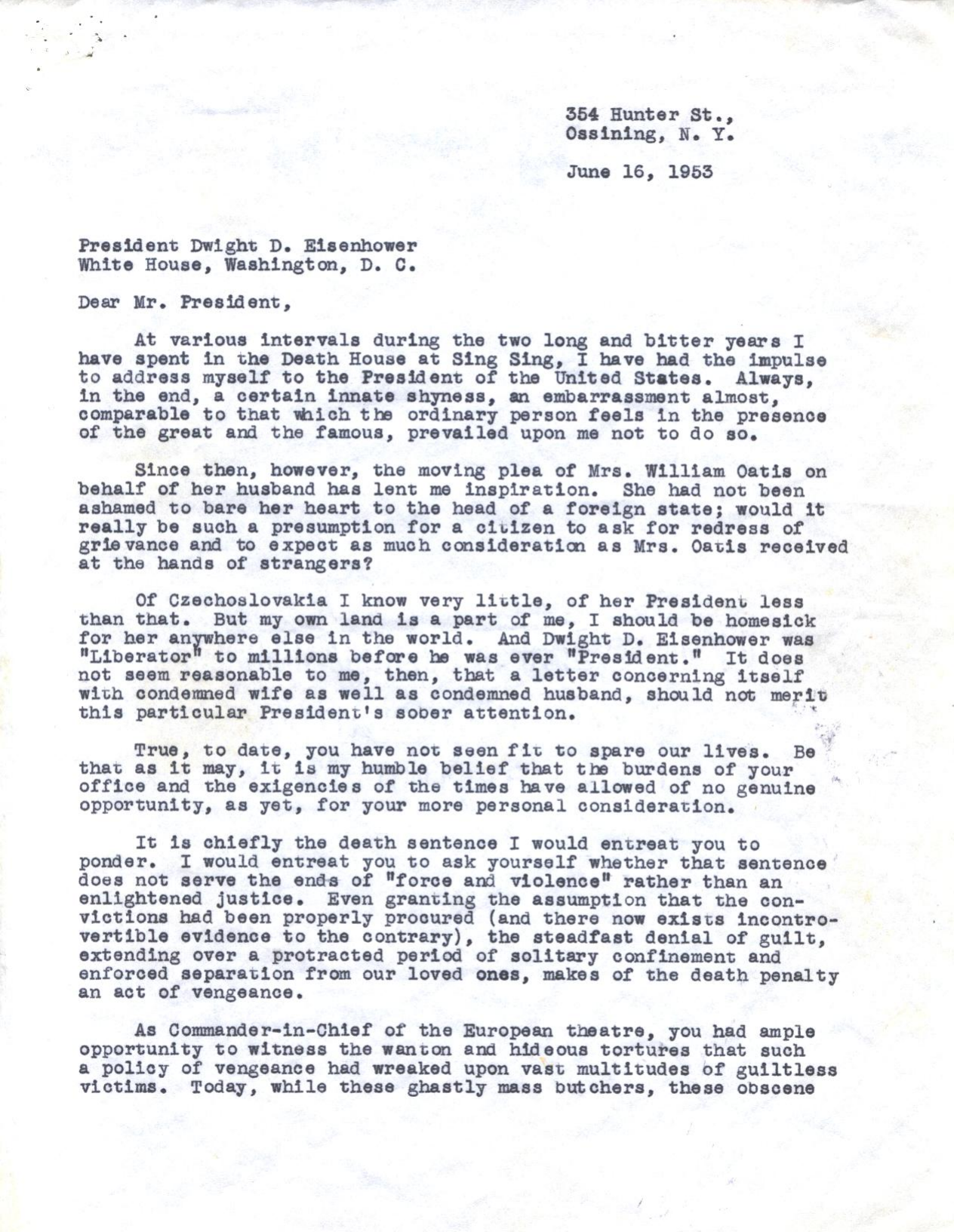
In this June 16, 1953 letter, Ethel Rosenberg appeals directly to President Dwight D. Eisenhower for clemency only days before her scheduled execution with her husband, Julius Rosenberg. Writing from the death house at Sing Sing Prison, Rosenberg explains that she had previously hesitated to contact the president but was inspired by another woman’s appeal to a foreign leader. She asks Eisenhower to reconsider the death sentences and questions whether execution serves the purposes of justice. Rosenberg maintains her innocence and argues that years of imprisonment, separation from family, and continued denial of guilt make the death penalty an act of vengeance rather than enlightened justice.
Rosenberg also appeals to Eisenhower’s experiences during World War II, contrasting American democratic and religious ideals with the brutality he witnessed in Europe. She argues that granting clemency would demonstrate American compassion and moral leadership. Her appeal becomes increasingly personal as she invokes her children, Eisenhower’s wife Mamie, his mother, and his own experience as a father. She asks him to consider how her execution would affect her sons and concludes that mercy would demonstrate true greatness. The letter provides a powerful firsthand account of Ethel Rosenberg’s final effort to persuade Eisenhower to commute the couple’s death sentences.
Used In These Lessons & Programs
Bring History to Life
Join us for engaging learning experiences designed for young minds.