Document
German Generals Alfred Jodl and Wilhelm Keitel Explain the Planning and Failure of the Ardennes Offensive (1945)
Key Details
Date: July 20, 1945
Created By: Major Kenneth W. Hechler
Original or Replica: Original
Era: The General, The Ardennes Offensive
Collection: Eisenhower Presidential Library
Citations: Walter Bedell Smith Collection of World War II Documents, Box 41, Interviews with High-Ranking German Officers (2); NAID #12130736
About
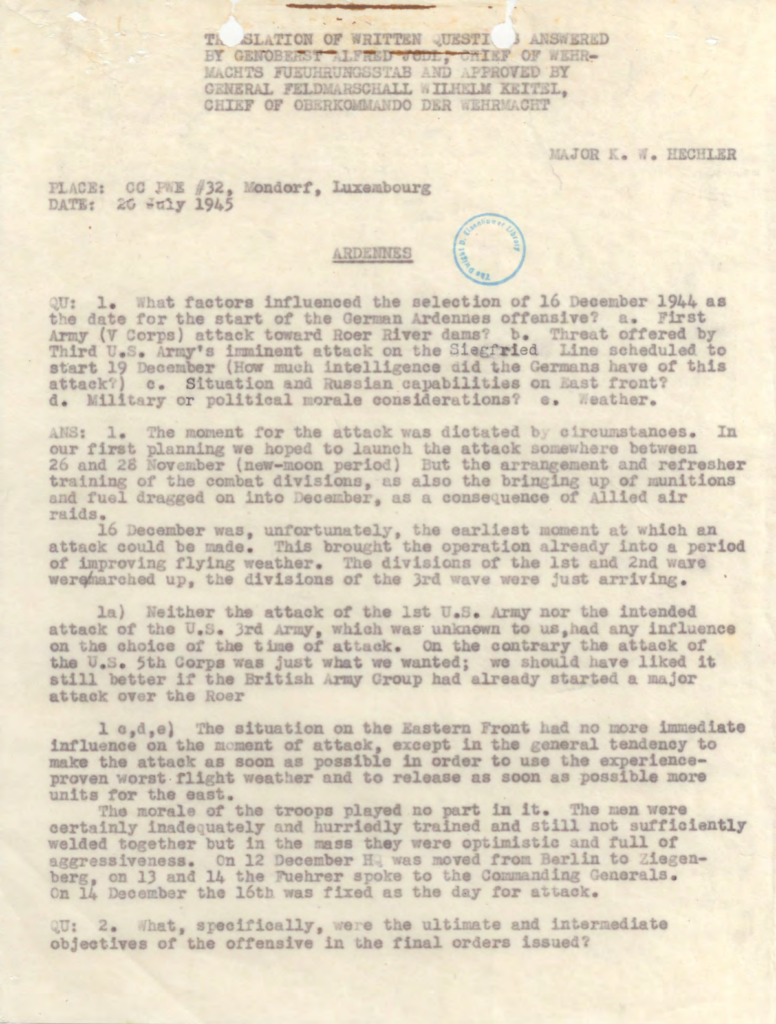
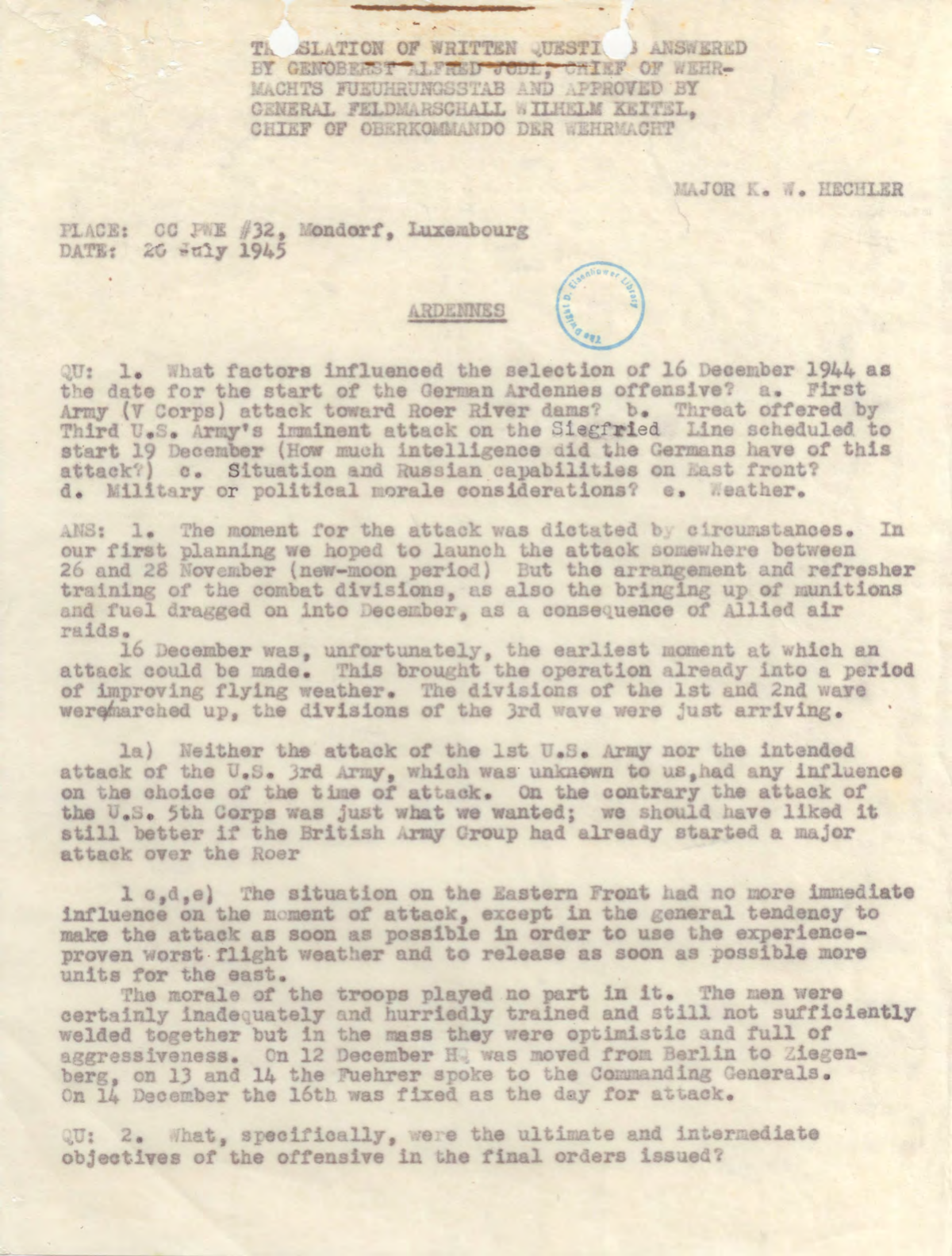
This July 20, 1945 document records written answers from German General Alfred Jodl, approved by Field Marshal Wilhelm Keitel, concerning the planning, execution, and failure of Germany’s Ardennes Offensive, better known as the Battle of the Bulge. The questioning examines why Germany launched the attack on December 16, 1944, its objectives, preparations, secrecy measures, troop strength, fuel supplies, and the German High Command’s expectations. The plan called for German forces to cross the Meuse and advance toward Antwerp, potentially splitting the Allied armies. Jodl explains that extensive measures were taken to conceal German preparations and achieve surprise.
The document also provides a German assessment of why the offensive failed. Jodl identifies poor roads and difficult terrain, stronger-than-expected American resistance—particularly around St. Vith—inadequate training among German commanders and troops, transportation shortages, and renewed Allied air superiority as important factors. He acknowledges that the speed of the Allied response exceeded German expectations and discusses the significance of Bastogne. By December 18–19, German commanders recognized that their original objectives were unlikely to be achieved. The document offers a valuable postwar perspective from senior German commanders on the strategy, assumptions, and failures behind Hitler’s final major offensive in Western Europe.
Used In These Lessons & Programs
Bring History to Life
Join us for engaging learning experiences designed for young minds.