Document
Eisenhower Explains His Reasons for Resisting Clemency for Julius and Ethel Rosenberg (1953)
Key Details
Date: June 10, 1953
Created By: Dwight D. Eisenhower
Original or Replica: Original
Era: The Presidency, The Rosenberg Case
Collection: Eisenhower Presidential Library
Citations: DDE’s Papers as President, Administration Series, Box 32, Rosenberg Case Statement; NAID #12572955
About
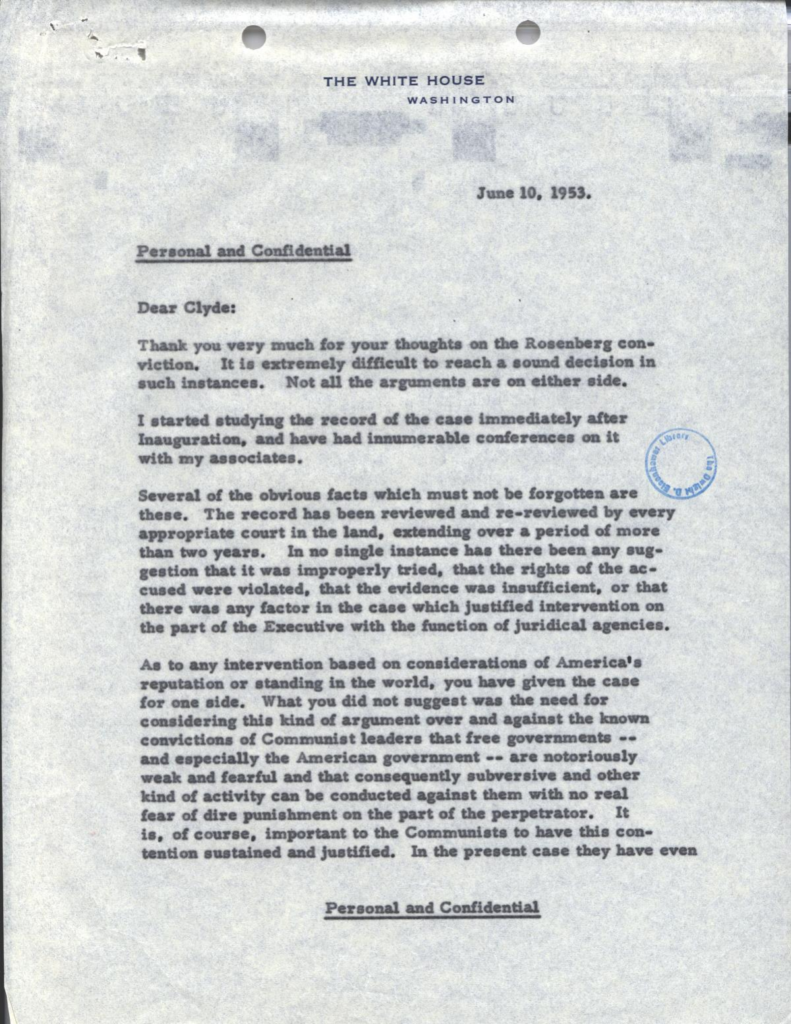
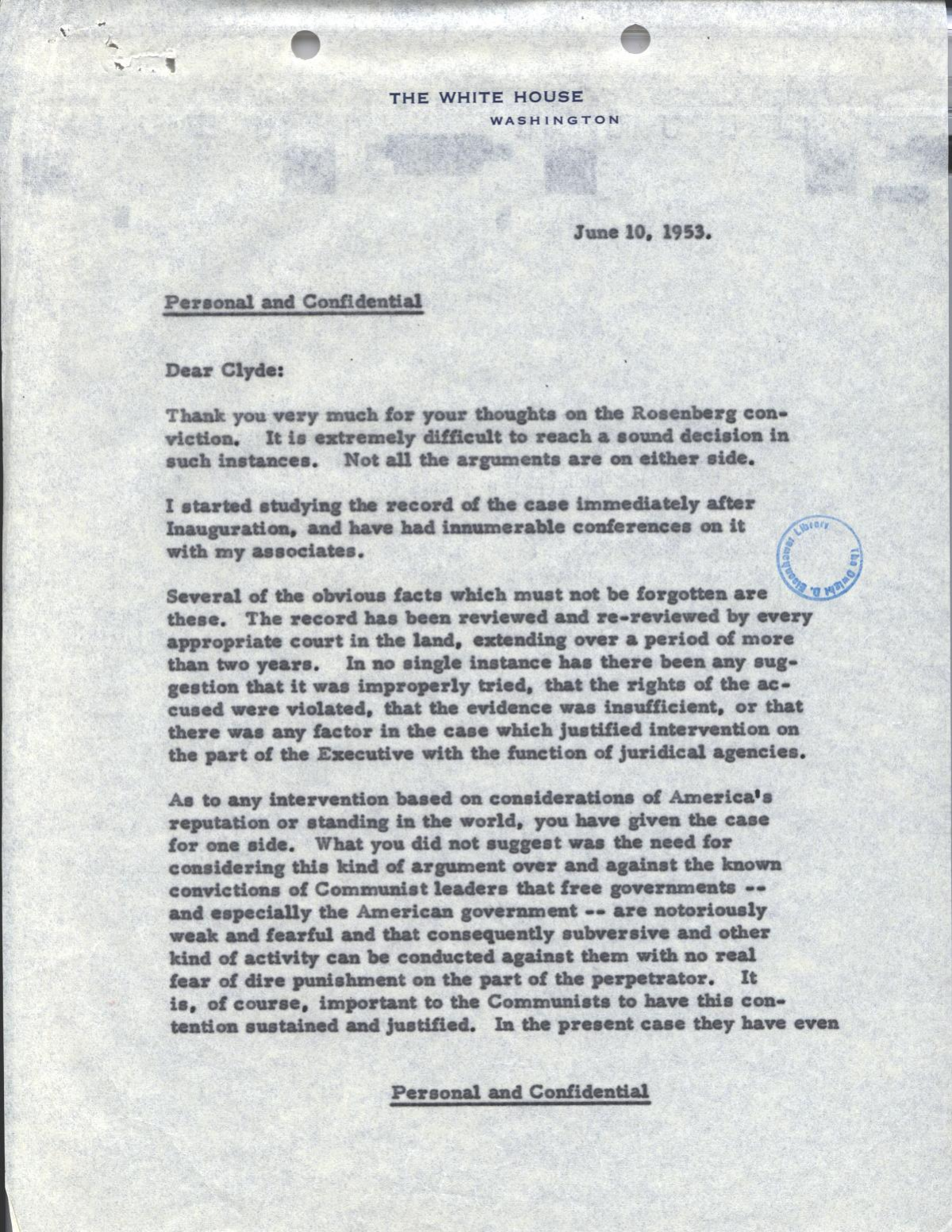
In this personal and confidential June 10, 1953 letter, President Dwight D. Eisenhower responds to Columbia University professor Clyde Miller regarding the convictions and death sentences of Julius and Ethel Rosenberg. Eisenhower acknowledges the difficulty of the case and explains that he had studied its record extensively and discussed it repeatedly with his advisers. He emphasizes that the convictions had undergone extensive judicial review and argues that there was no indication the Rosenbergs had been improperly tried or denied their rights.
Eisenhower also addresses arguments that clemency might improve America’s international reputation. He worries that reducing the sentences could instead reinforce Communist claims that democratic governments were weak and encourage future espionage. He describes the Rosenbergs’ actions as having endangered millions of Americans and rejects the idea that Ethel Rosenberg’s sex should justify executive intervention, arguing that such reasoning might encourage Communist intelligence services to use women as spies. Eisenhower tells Miller that he could not yet justify commuting the death sentences, although he notes that another clemency petition would soon be considered. The letter provides an unusually detailed explanation of Eisenhower’s thinking as he weighed justice, mercy, national security, international opinion, and presidential clemency shortly before the Rosenbergs’ executions.
Used In These Lessons & Programs
Bring History to Life
Join us for engaging learning experiences designed for young minds.