Document
Attorney General Reports on Eisenhower Administration Efforts to Eliminate Racial Segregation and Discrimination (1955)
Key Details
Date: January 26, 1955
Created By: Herbert Brownell
Original or Replica: Original
Era: The Presidency, Civil Rights
Collection: Eisenhower Presidential Library
Citations: DDE’s Papers as President, Cabinet Series, Box 4, Cabinet Meeting of January 28, 1955; NAID #12191289
About
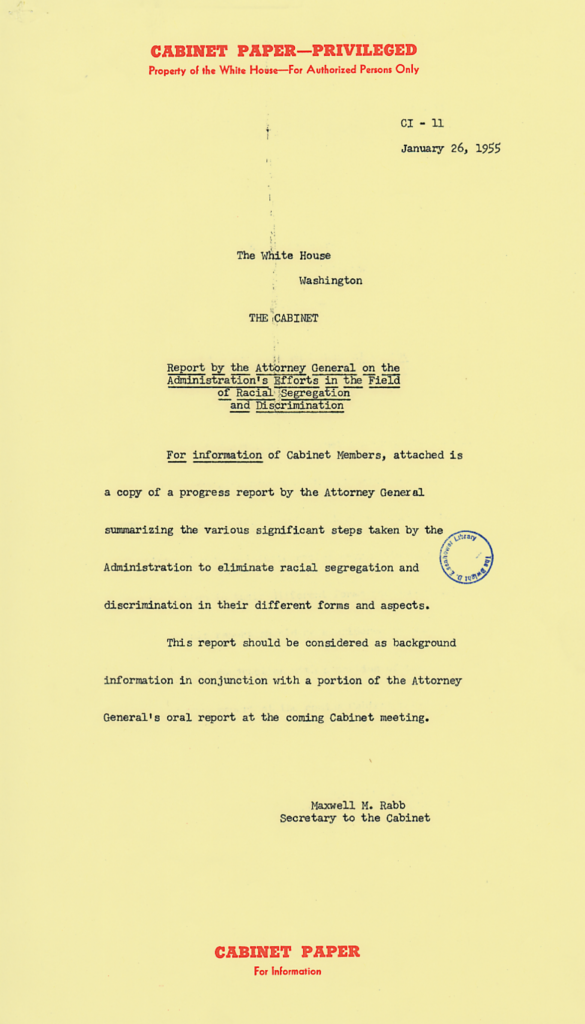
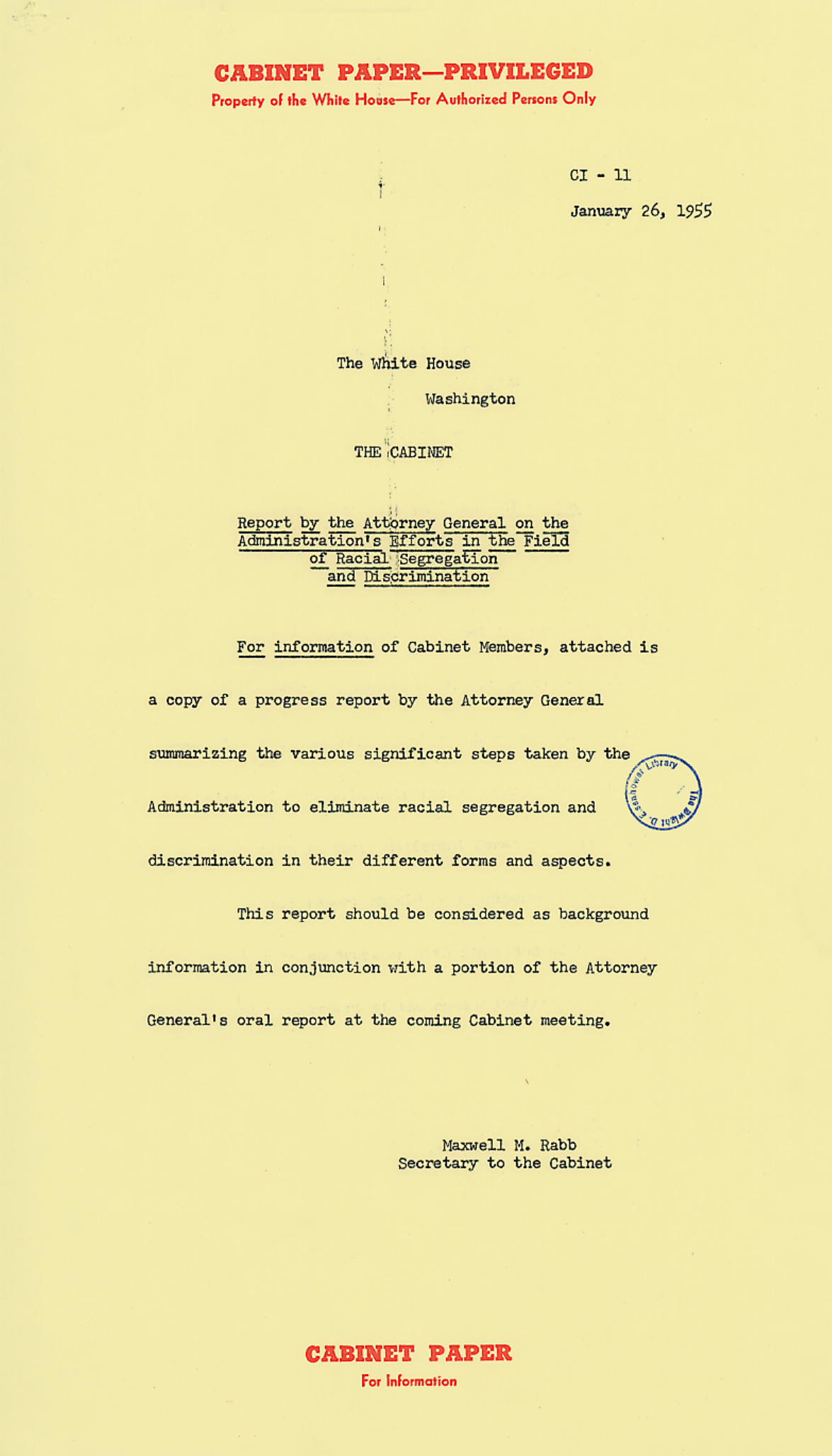
This January 26, 1955 Cabinet report summarizes the Eisenhower administration’s efforts to eliminate racial segregation and discrimination across several areas of American life. Prepared by the Attorney General for discussion with Cabinet members, the report describes federal actions involving education, transportation, the Armed Forces, hospitals, employment, public facilities, airports, housing, and the District of Columbia. In education, it discusses the administration’s involvement in the Supreme Court proceedings following Brown v. Board of Education, including the federal government’s support for ending school segregation as quickly as practicable. It also describes efforts to desegregate schools operated by the military and in the District of Columbia.
The report documents additional steps taken throughout the executive branch. It describes Justice Department efforts to challenge segregation in interstate transportation; continued integration of the Armed Forces; the elimination of segregation in Veterans Administration hospitals; enforcement of nondiscrimination requirements in federal employment and government contracts; and efforts to eliminate segregation at facilities under the Department of the Interior. It also discusses racial discrimination in airports, public accommodations in Washington, D.C., and federally connected housing.
The document provides a broad overview of the Eisenhower administration’s civil rights policies during its first two years and illustrates how the federal government used executive orders, administrative policies, litigation, and federal authority to address racial discrimination before the major civil rights legislation of the late 1950s and 1960s.
Used In These Lessons & Programs
Bring History to Life
Join us for engaging learning experiences designed for young minds.