Document
Eisenhower Reflects on the Continuing Dangers of the Military-Industrial Complex (1966)
Key Details
Date: February 7, 1966
Created By: Dwight D. Eisenhower
Original or Replica: Original
Era: The Statesman, The Presidency, The Cold War
Collection: Eisenhower Presidential Library
Citations: DDE’s Post-Presidential Papers, Special Names Series, Box 7, Harlow Bryce 1966; NAID #16972236
About
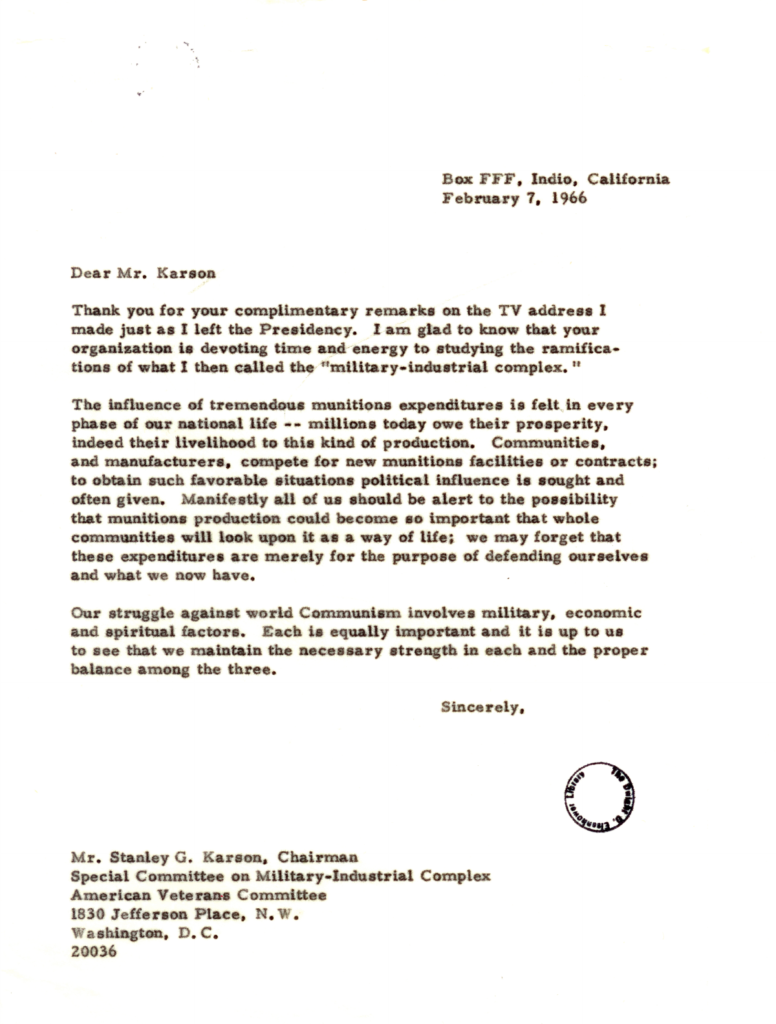
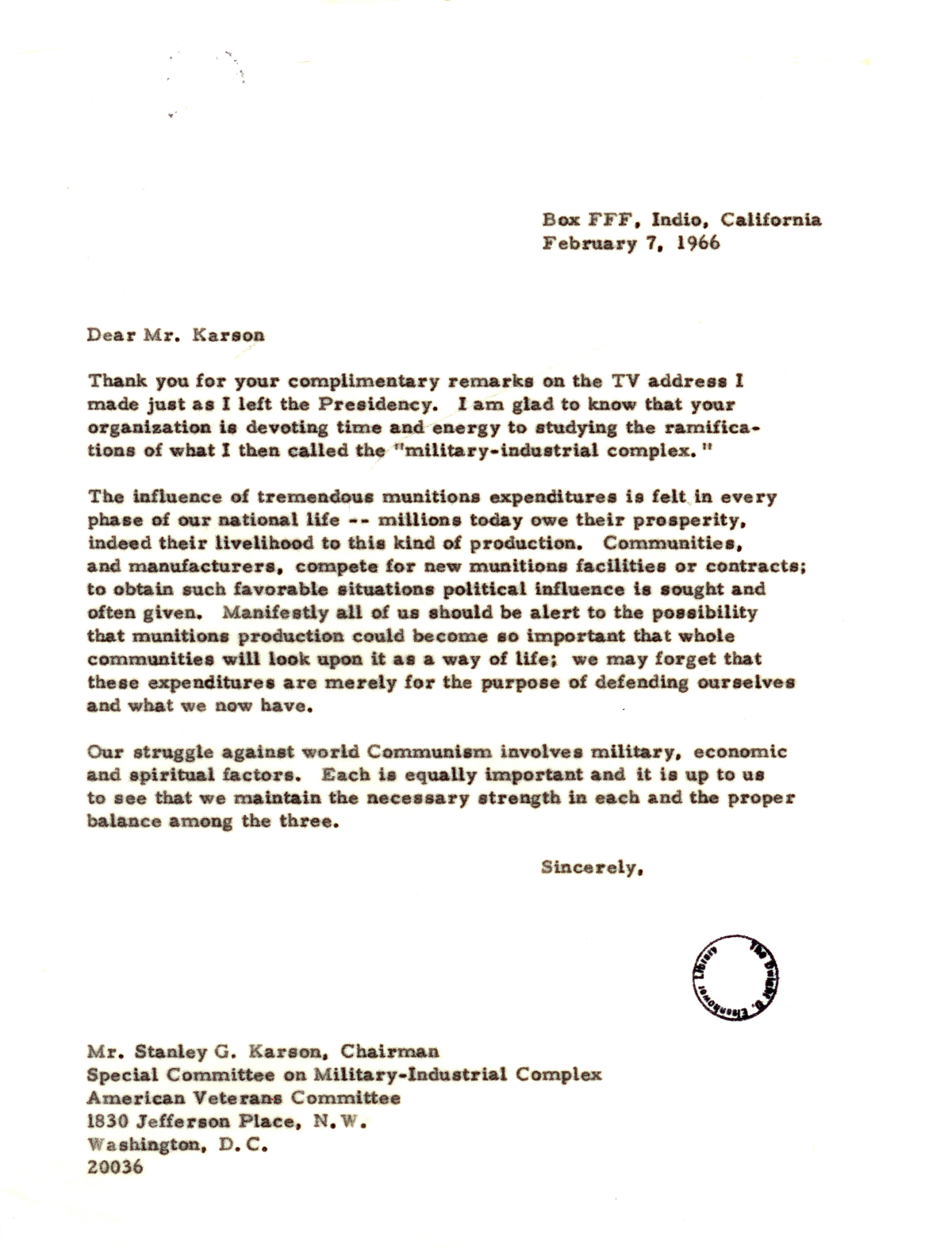
In this February 7, 1966 letter, former President Dwight D. Eisenhower responds to Stanley G. Karson, chairman of the American Veterans Committee’s Special Committee on the Military-Industrial Complex. Karson had written Eisenhower on the fifth anniversary of his Farewell Address, asking for his current thoughts about the military-industrial complex. Eisenhower expresses appreciation for the organization’s continued study of the issue and makes clear that he remained concerned about the dangers he had identified while leaving the presidency.
Eisenhower focuses particularly on the economic and political influence created by enormous defense and munitions expenditures. He argues that millions of Americans depended economically on defense production and that communities and manufacturers competed for military facilities and government contracts. Because these expenditures could bring jobs and prosperity, Eisenhower warns that political influence might be used to obtain or preserve defense spending. His concern was that military production could become so important to local economies that Americans might begin viewing it as a normal way of life rather than remembering that its fundamental purpose was national defense.
Eisenhower concludes by placing the issue within the Cold War struggle against world Communism. He argues that American security depended upon maintaining military, economic, and spiritual strength while preserving the proper balance among all three. The letter demonstrates that, five years after his Farewell Address, Eisenhower continued to believe that the military-industrial complex posed a significant challenge requiring continued public vigilance.
Document(s)
Used In These Lessons & Programs
Bring History to Life
Join us for engaging learning experiences designed for young minds.