Document
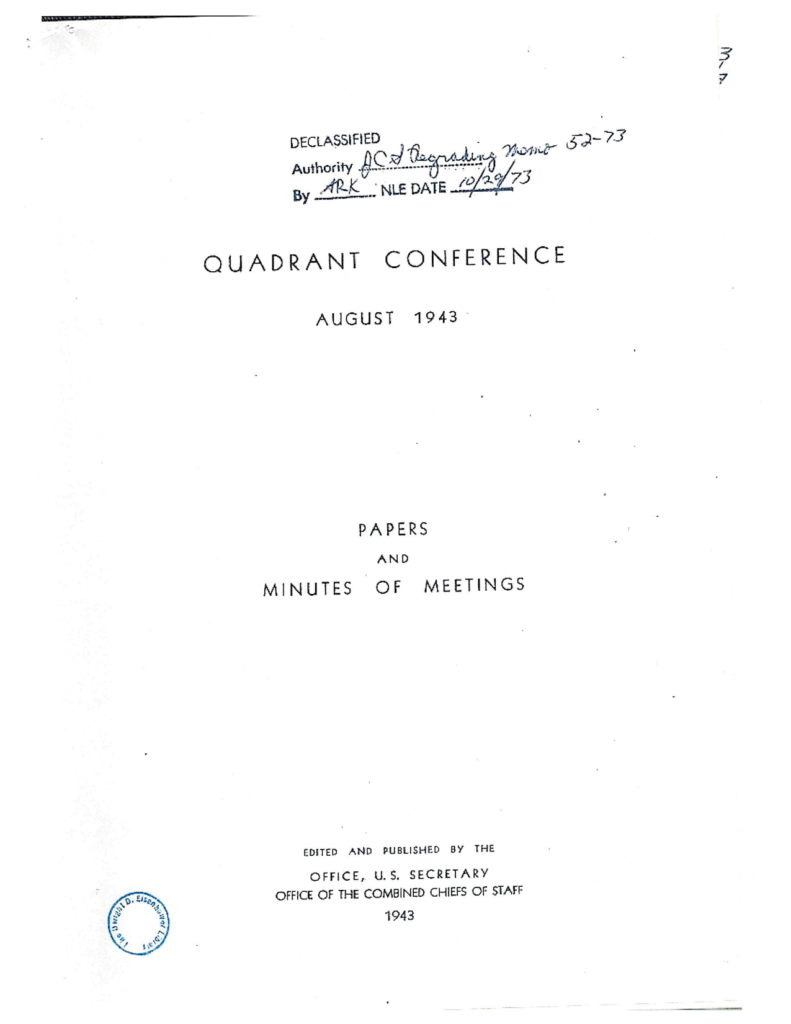
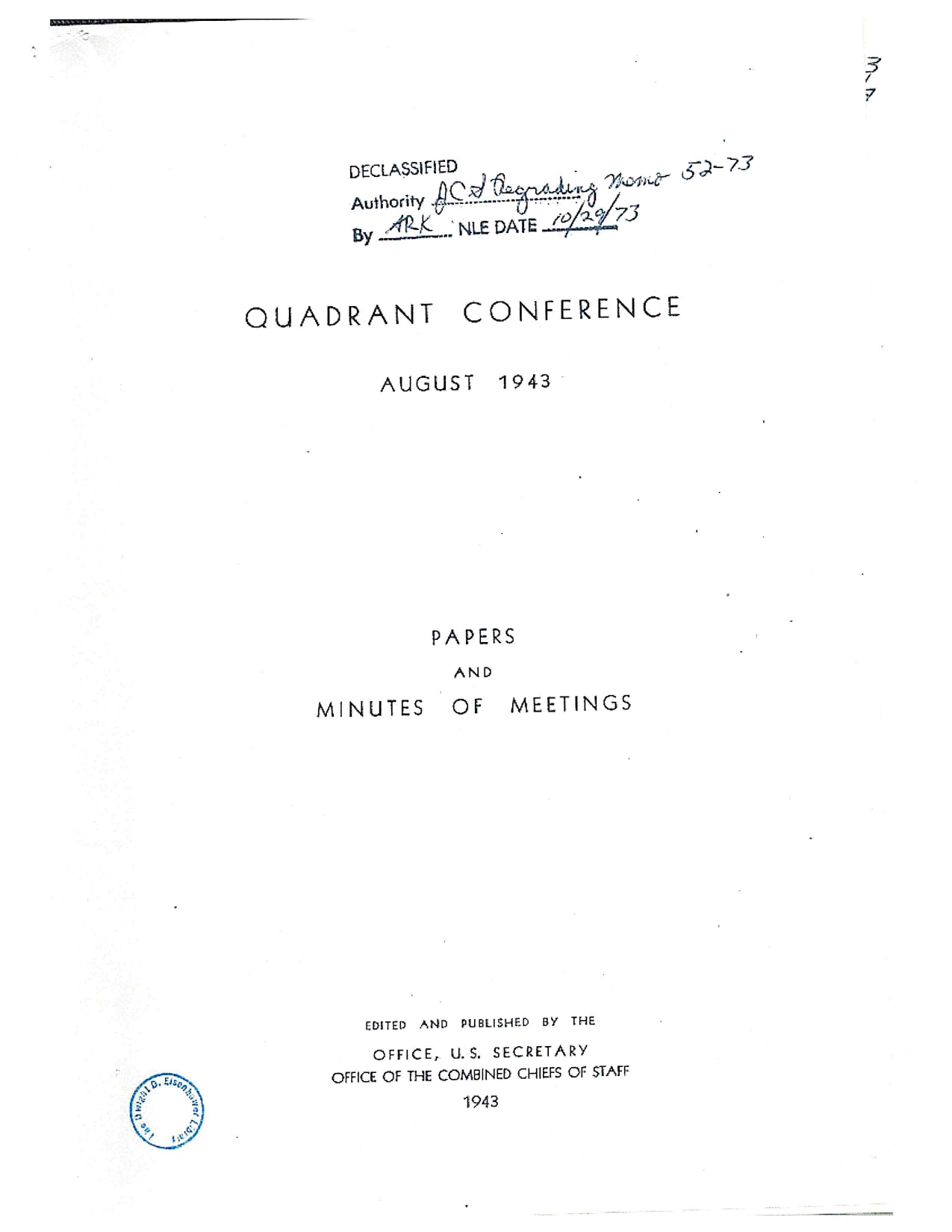
Allied Chiefs Review the First Operation Overlord Plan and the Requirements for a Successful Invasion of Normandy (1943)
Key Details
Date: August, 1943
Created By: Edited and Published by the Office , U.S. Secretary, Office of the Combined Chiefs of Staff
Original or Replica: Original
Era: The General, D-Day and the Normandy Invasion
Collection: Eisenhower Presidential Library
Citations: Combined Chiefs of Staff: Conference Proceedings, Box 2, Quadrant Conference August 1943 Papers and Minutes of Meetings; NAID #12005143
About
These August 1943 documents from the Quadrant Conference examine the early outline plan for Operation Overlord, the proposed Allied cross-Channel invasion of France in 1944. The British Chiefs of Staff review the plan developed by Lieutenant General Frederick E. Morgan, Chief of Staff to the Supreme Allied Commander (Designate), and identify several conditions necessary for success. These included weakening the German fighter force, limiting the number of German reserve divisions available in France and the Low Countries, preventing major German reinforcements from arriving from the Soviet front, and solving the difficult problem of supplying Allied forces across the invasion beaches for an extended period.
Morgan concludes that, given the available resources, the Allies had a reasonable chance of success if they concentrated their invasion on the Normandy beaches around Bayeux, with a target date of approximately May 1, 1944. The documents emphasize that success depended heavily on adequate shipping, landing craft, transport aircraft, and the ability to maintain troops over the beaches while captured ports were repaired. Morgan warns that weather and tides in the English Channel would make the operation considerably more difficult than the recent Allied invasion of Sicily.
The British Chiefs also express concern that Morgan’s assumptions about the speed of the Allied advance and the number of German reinforcements were too optimistic. They nevertheless recommend approving the outline so detailed planning and preparations could begin immediately.
The documents provide an important look at Operation Overlord while it was still in its early planning stages, months before Eisenhower became Supreme Allied Commander and expanded the invasion plan that ultimately became D-Day.
Used In These Lessons & Programs
Bring History to Life
Join us for engaging learning experiences designed for young minds.