Document
U.S. Officials Track Soviet Bloc Reaction to Eisenhower’s Atoms for Peace Speech (1953)
Key Details
Date: December 14, 1953
Created By: No Author
Original or Replica: Original
Era: The Presidency, The Cold War
Collection: Eisenhower Presidential Library
Citations: C.D. Jackson Papers, Box 100, Speech Texts 1953 (1); NAID #12022765
About
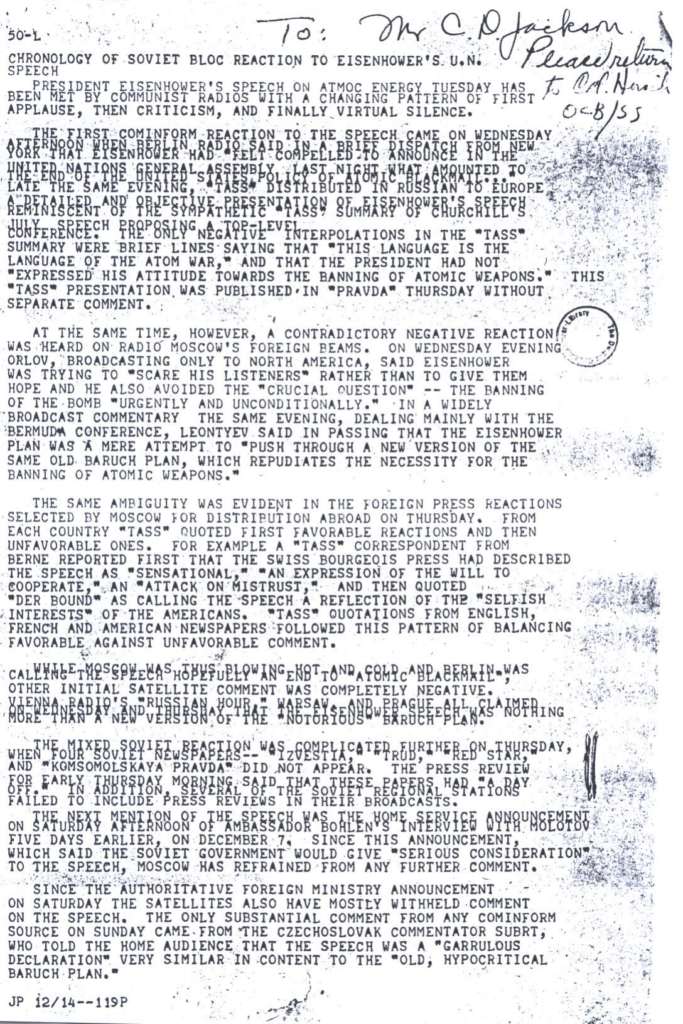
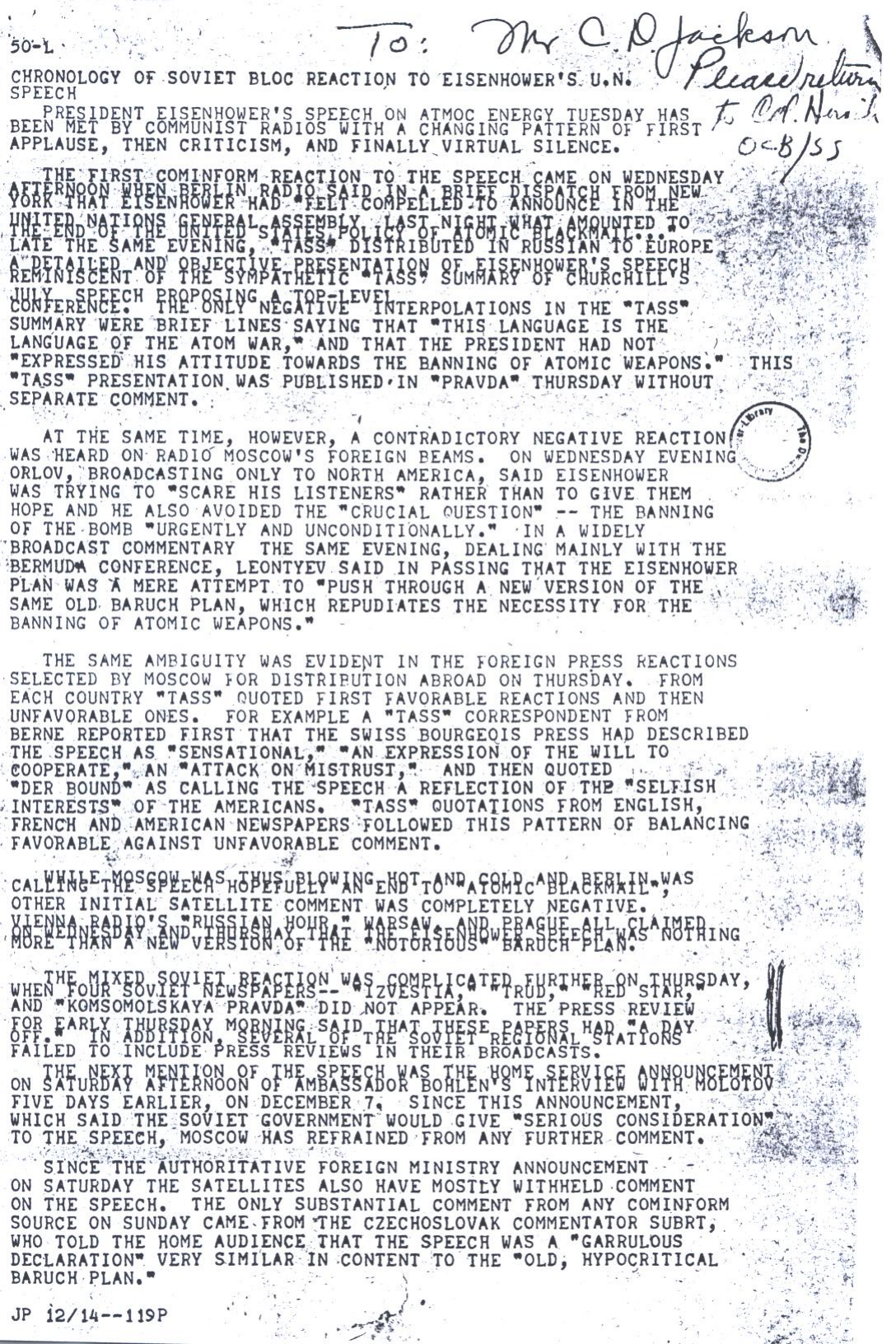
This December 14, 1953 report provides a chronology of Soviet and Eastern Bloc reactions to President Dwight D. Eisenhower’s Atoms for Peace address before the United Nations. According to the report, Communist radio broadcasts initially followed a changing pattern of applause, criticism, and eventually near silence. The first significant Soviet response came from Radio Moscow, which provided what the report describes as a relatively detailed and objective summary of Eisenhower’s speech. Soviet commentary soon became more critical, however, particularly of Eisenhower’s discussion of nuclear weapons and the threat of atomic war.
The report highlights conflicting messages within Soviet propaganda. Some broadcasts accused Eisenhower of trying to frighten listeners rather than offering genuine hope and criticized him for not calling for an immediate ban on atomic weapons. Commentary surrounding the recent Bermuda Conference also portrayed the proposal as an attempt to revive the earlier Baruch Plan, which the Soviet Union had opposed. At the same time, Soviet-controlled media circulated selected Western newspaper reactions, balancing favorable assessments of Eisenhower’s proposal against critical ones.
By December 10, the report notes that major Soviet newspapers had provided surprisingly little direct commentary. Pravda and Izvestia had not published substantial editorials on the proposal, while Radio Moscow largely stopped discussing it. Eastern European Communist governments similarly offered little official reaction, although a Czechoslovak commentator dismissed the speech as resembling the earlier Baruch Plan.
The document provides a useful snapshot of how American officials monitored Soviet propaganda and interpreted the Communist world’s uncertain initial response to Eisenhower’s Atoms for Peace initiative.
Used In These Lessons & Programs
Bring History to Life
Join us for engaging learning experiences designed for young minds.