
Document
Appeal to Eisenhower to Commute the Rosenbergs’ Death Sentences (1953)
Key Details
Date: May 29, 1953
Created By: Charles Taquey
Original or Replica: Original
Era: The Presidency, The Rosenberg Case
Collection: Eisenhower Presidential Library
Citations: NSC Staff Papers, PSB Central Files Series, Box 17, PSB 092 (1); NAID #12572009
About
Ethel and Julius Rosenberg were arrested in 1950 and accused of participating in a Soviet espionage network that provided secret information about the American atomic bomb program to the Soviet Union. In 1951, a federal jury convicted them of conspiracy to commit espionage. They were sentenced to death, making their case one of the most controversial espionage cases of the early Cold War.
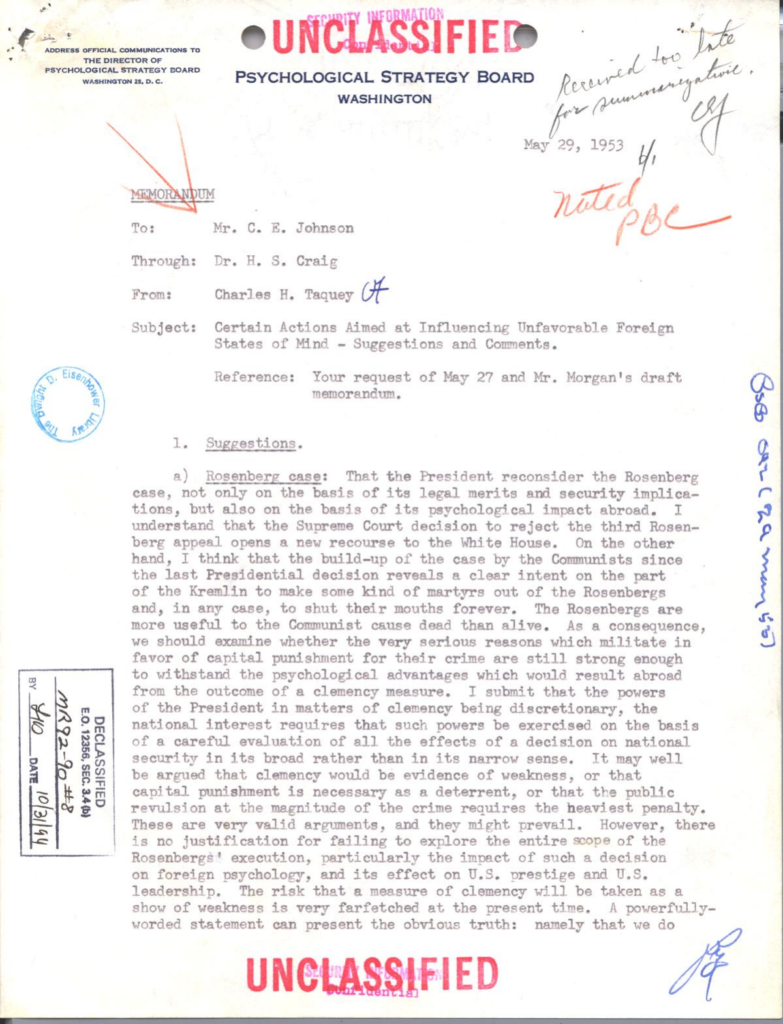
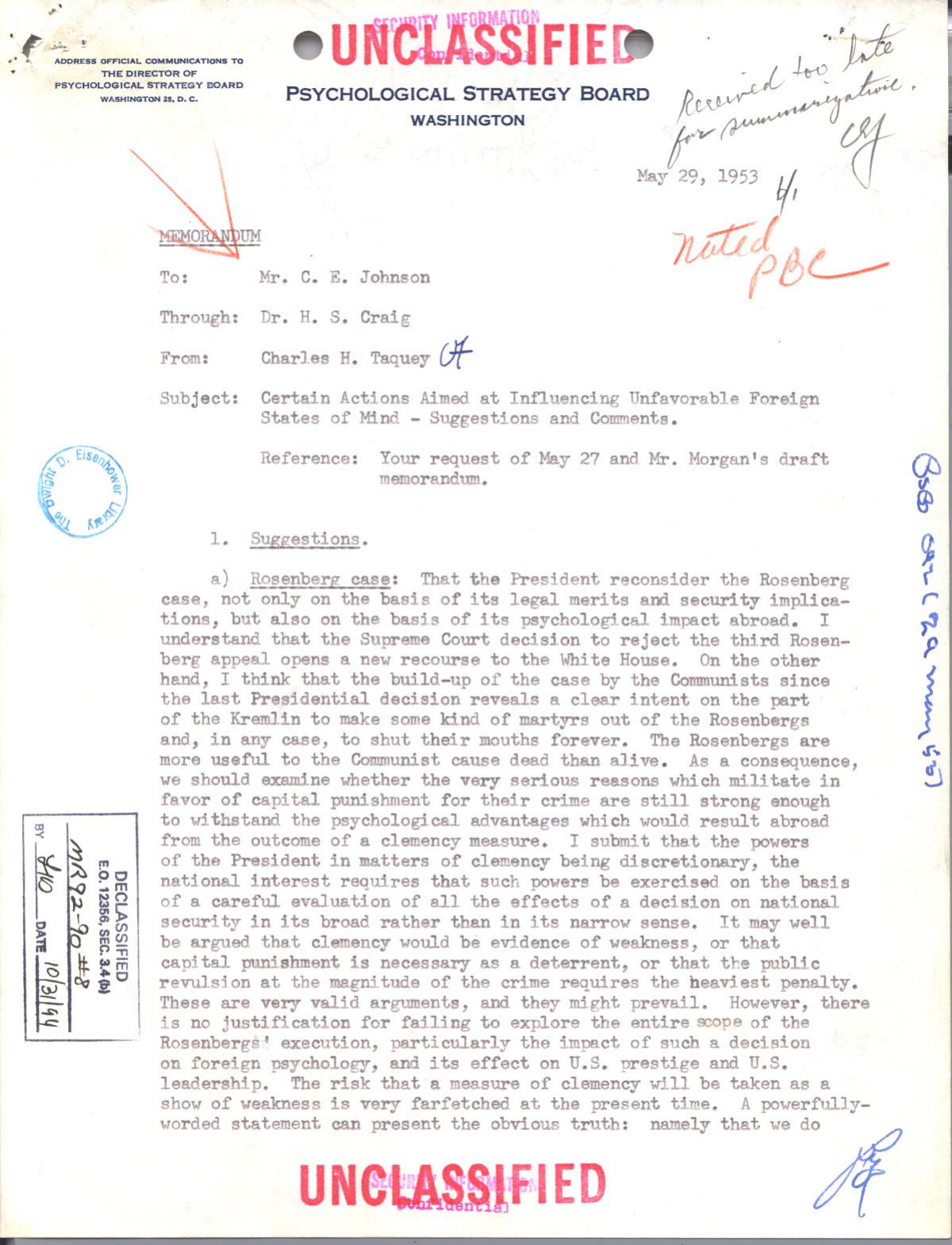
This document is a memorandum sent to a White House adviser arguing that President Dwight D. Eisenhower should commute the Rosenbergs’ death sentences. Under Article II, Section 2 of the U.S. Constitution, the president has the authority to grant reprieves and pardons for federal crimes. This presidential clemency power also includes commutation, which allows the president to reduce a criminal sentence without overturning the conviction.
The author argues that executing the Rosenbergs could have serious consequences for the United States. The Soviet Union, the author warns, could use the executions as propaganda and portray the United States as a nation that puts political opponents to death. The author also argues that executing the couple could make the United States appear fearful or weak and conflict with the religious and moral beliefs of many Americans. Ultimately, the author urges Eisenhower to commute the Rosenbergs’ sentences, arguing that doing so would provide significant advantages to the United States with relatively few disadvantages.
Used In These Lessons & Programs
Bring History to Life
Join us for engaging learning experiences designed for young minds.