Document
Psychological Strategy Board Warns That the Rosenberg Clemency Decision Could Carry Over into the Eisenhower Administration (1953)
Key Details
Date: January 7, 1953
Created By: Edward O'Conner
Original or Replica: Original
Era: The Presidency, The Rosenberg Case
Collection: Eisenhower Presidential Library
Citations: NSC Staff Papers, PSB Central Files Series, Box 26, PSB 383.4; NAID #12572003
About
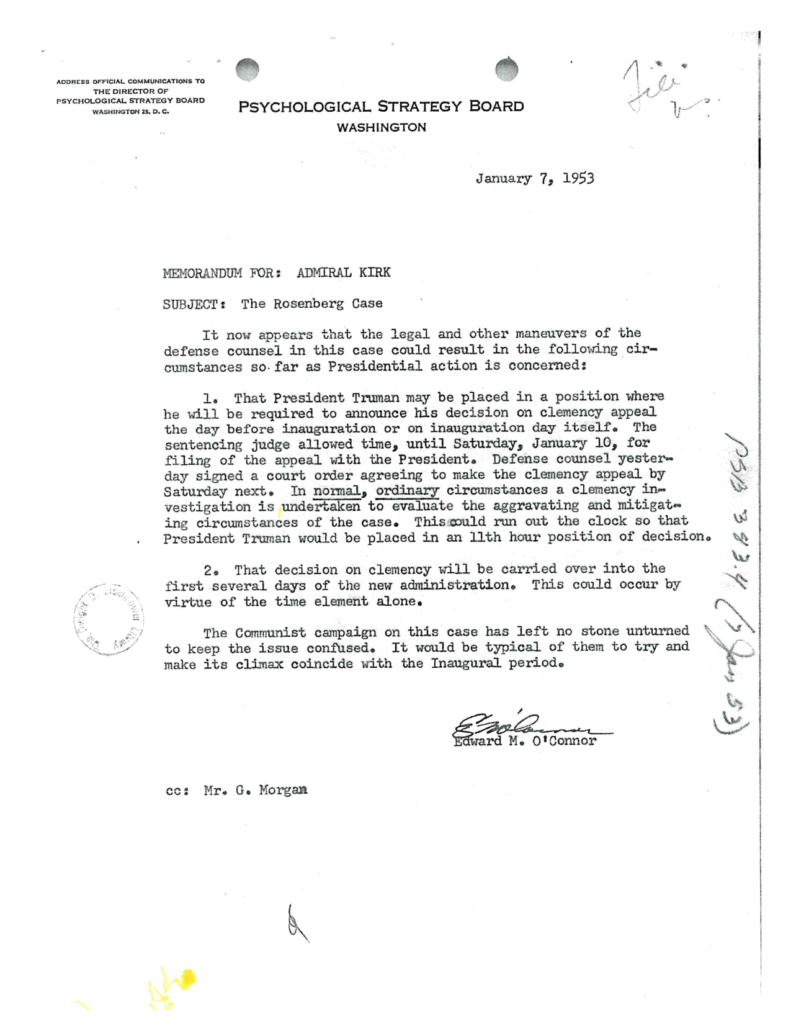
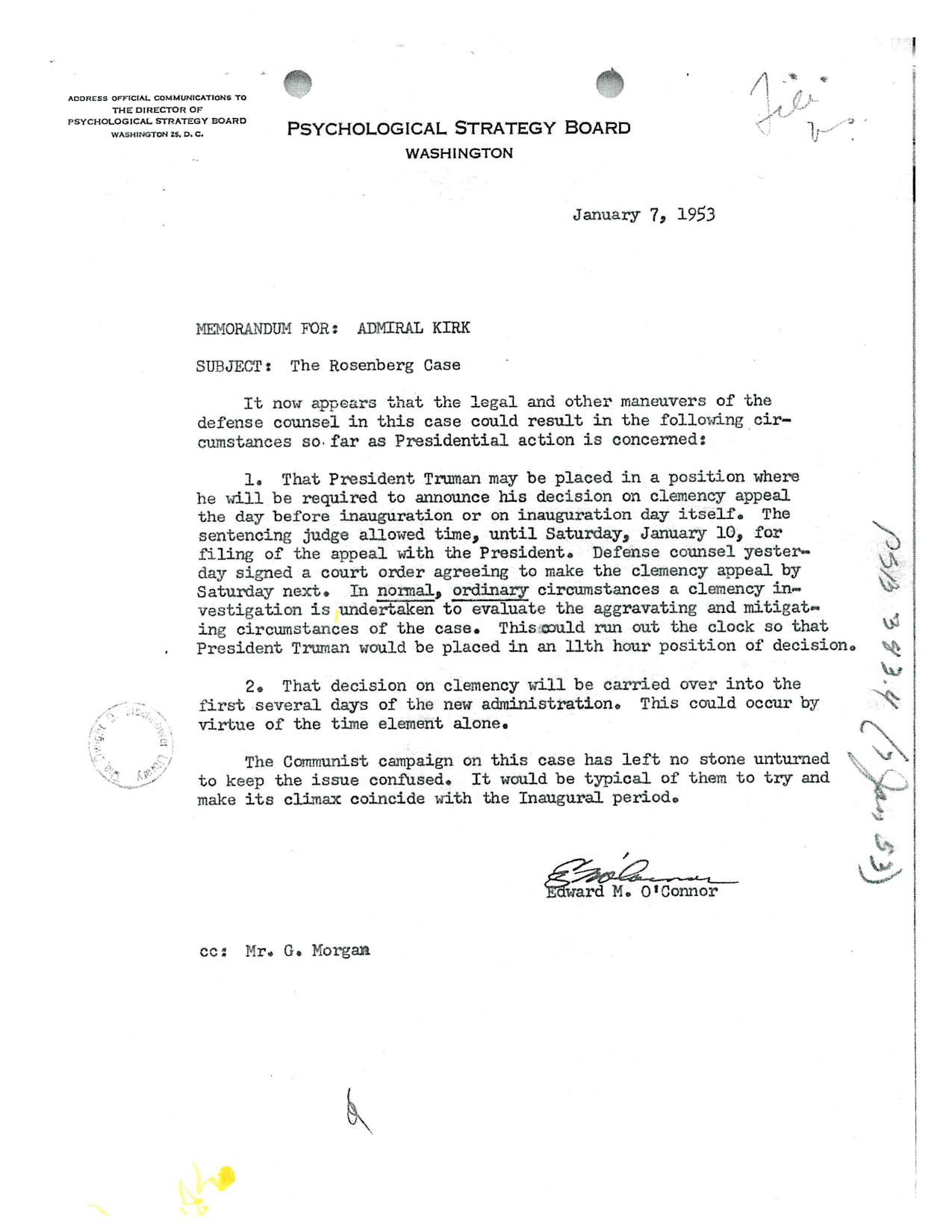
This January 7, 1953 memorandum from Edward M. O’Connor of the Psychological Strategy Board discusses how continuing legal efforts in the Julius and Ethel Rosenberg case might affect the transition from President Harry S. Truman to President-elect Dwight D. Eisenhower. With the Rosenbergs facing execution for conspiracy to commit espionage, O’Connor explains that their attorneys were preparing a presidential clemency appeal that could force Truman to make a decision shortly before Eisenhower’s inauguration.
The memorandum identifies two possibilities. Truman might be required to rule on the clemency request during his final days in office, or the decision could be delayed until the opening days of the new Eisenhower administration. O’Connor notes that a normal clemency review would require an investigation of aggravating and mitigating circumstances, potentially extending the process beyond Truman’s presidency. The document also reflects the Cold War atmosphere surrounding the case, warning that a Communist campaign had sought to create confusion around the Rosenbergs and might attempt to make the case’s climax coincide with Eisenhower’s inauguration. Written before Eisenhower took office, the memorandum demonstrates how the Rosenberg case was already viewed as a potential legal, political, and propaganda challenge for the incoming administration.
Used In These Lessons & Programs
Bring History to Life
Join us for engaging learning experiences designed for young minds.