Document
Theodore Repplier Proposes a U.S. Humanitarian “Crusade” to Counter Communist Propaganda During the Cold War (1955)
Key Details
Date: August 3, 1955
Created By: Theodore Repplier
Original or Replica: Original
Era: The Presidency, The Cold War
Collection: Eisenhower Presidential Library
Citations: DDE’s Papers as President, Administration Series, Box 30, Nelson Rockefeller 1952-55 (3); NAID #12022932
About
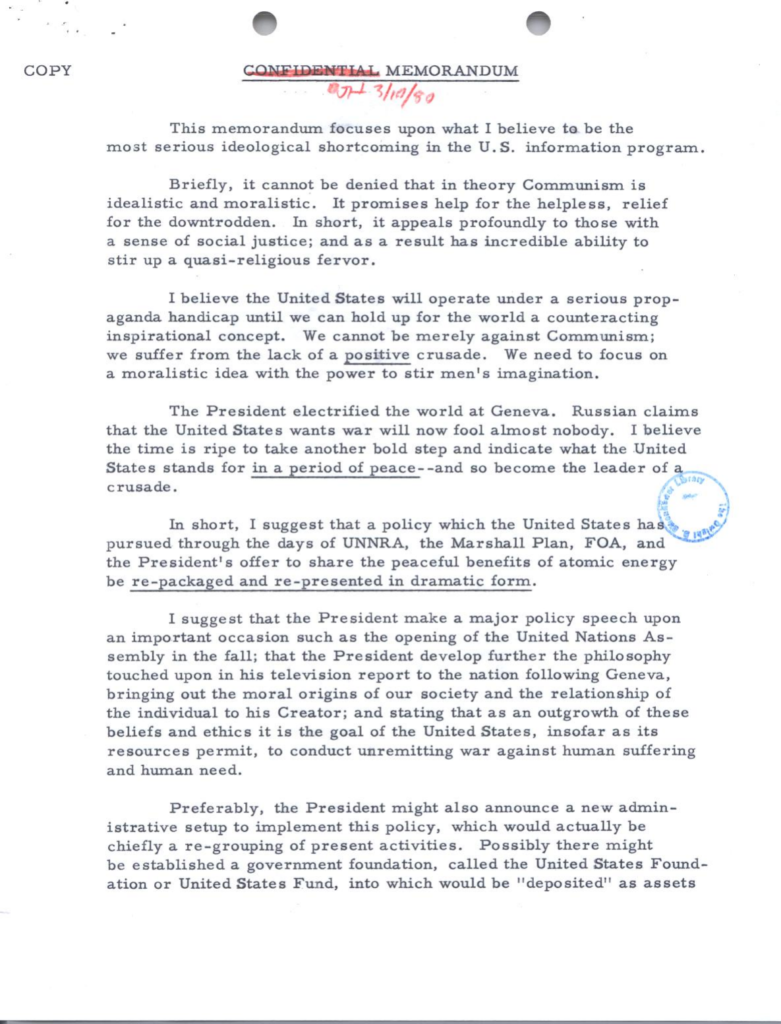
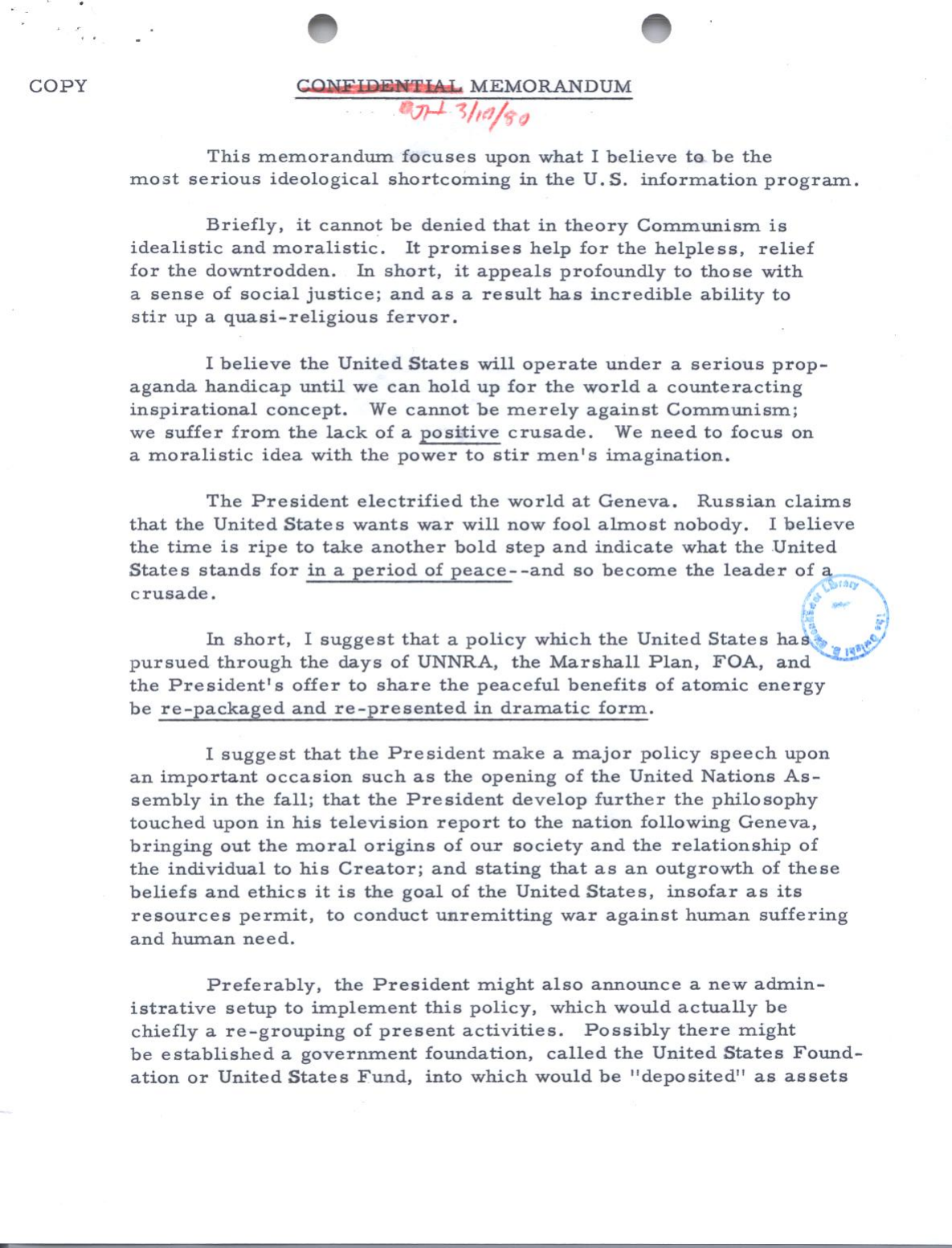
In this August 3, 1955 confidential memorandum, Theodore S. Repplier addresses what he considers a major weakness in the United States’ Cold War information strategy. Repplier argues that Communism possessed a powerful ideological appeal because it presented itself as a movement promising assistance to the poor, relief for the oppressed, and social justice. The United States, he contends, could not effectively compete by simply opposing Communism; it needed a positive and inspirational message of its own capable of appealing to people throughout the world.
Following President Dwight D. Eisenhower’s performance at the 1955 Geneva Summit, Repplier believes the United States had an opportunity to present itself as the leader of a worldwide campaign for peace and human welfare. He recommends building upon existing American initiatives—including the Marshall Plan, foreign aid programs, and Eisenhower’s Atoms for Peace proposal—and presenting them as parts of a unified humanitarian effort. He suggests that Eisenhower announce this policy in a major speech, possibly before the United Nations, and emphasize America’s commitment to combating human suffering and need.
Repplier further proposes creating a government foundation that could combine surplus food, foreign assistance funds, atomic energy technology, technical expertise, and other American resources. He even suggests directing some savings from future disarmament toward this effort and inviting other prosperous nations to participate, with the possibility of eventually transforming it into an international program.
The memorandum provides a revealing look at Cold War psychological and ideological competition, showing how American officials and advisers considered humanitarian assistance, economic development, peace, and atomic technology as tools for countering the global appeal of Communism.
Used In These Lessons & Programs
Bring History to Life
Join us for engaging learning experiences designed for young minds.