Document
Professor Theodore Kennedy Asks Eisenhower About the Origins of His “Military-Industrial Complex” Warning (1967)
Key Details
Date: June 13, 1967
Created By: Ted Kennedy
Original or Replica: Original
Era: The Statesman, The Presidency, The Cold War
Collection: Eisenhower Presidential Library
Citations: DDE’s Post-Presidential Papers, 1967 Principal File, Box 5, BE (Business Economics) (6); NAID #16972245
About
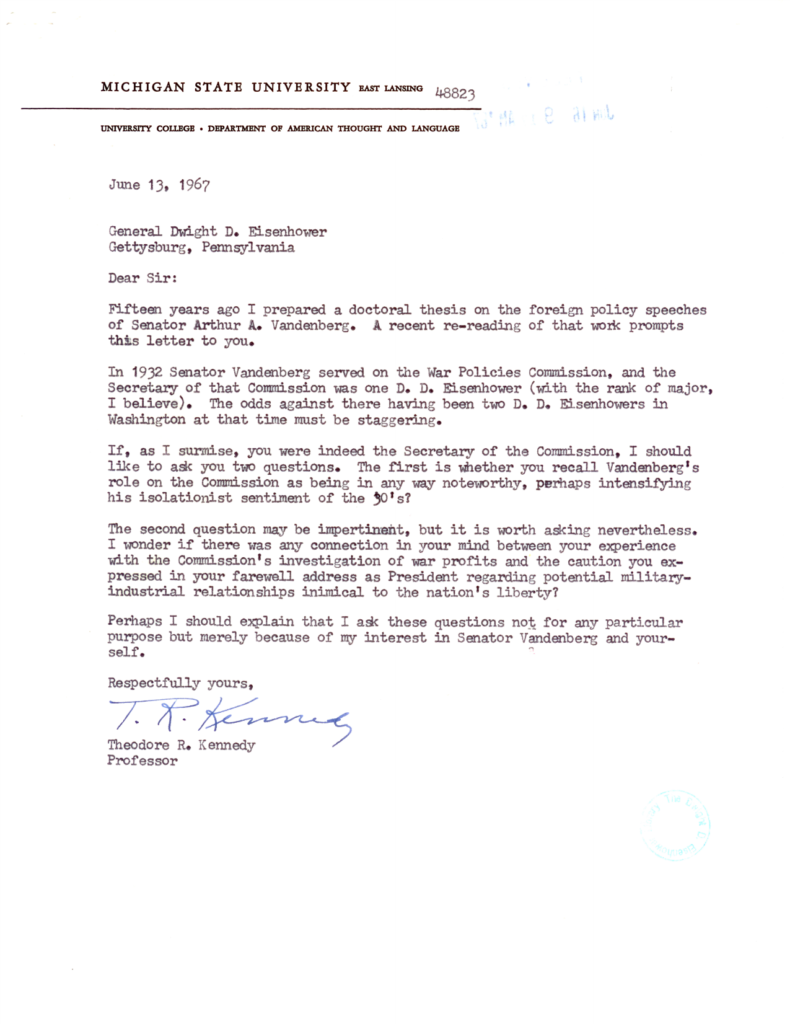
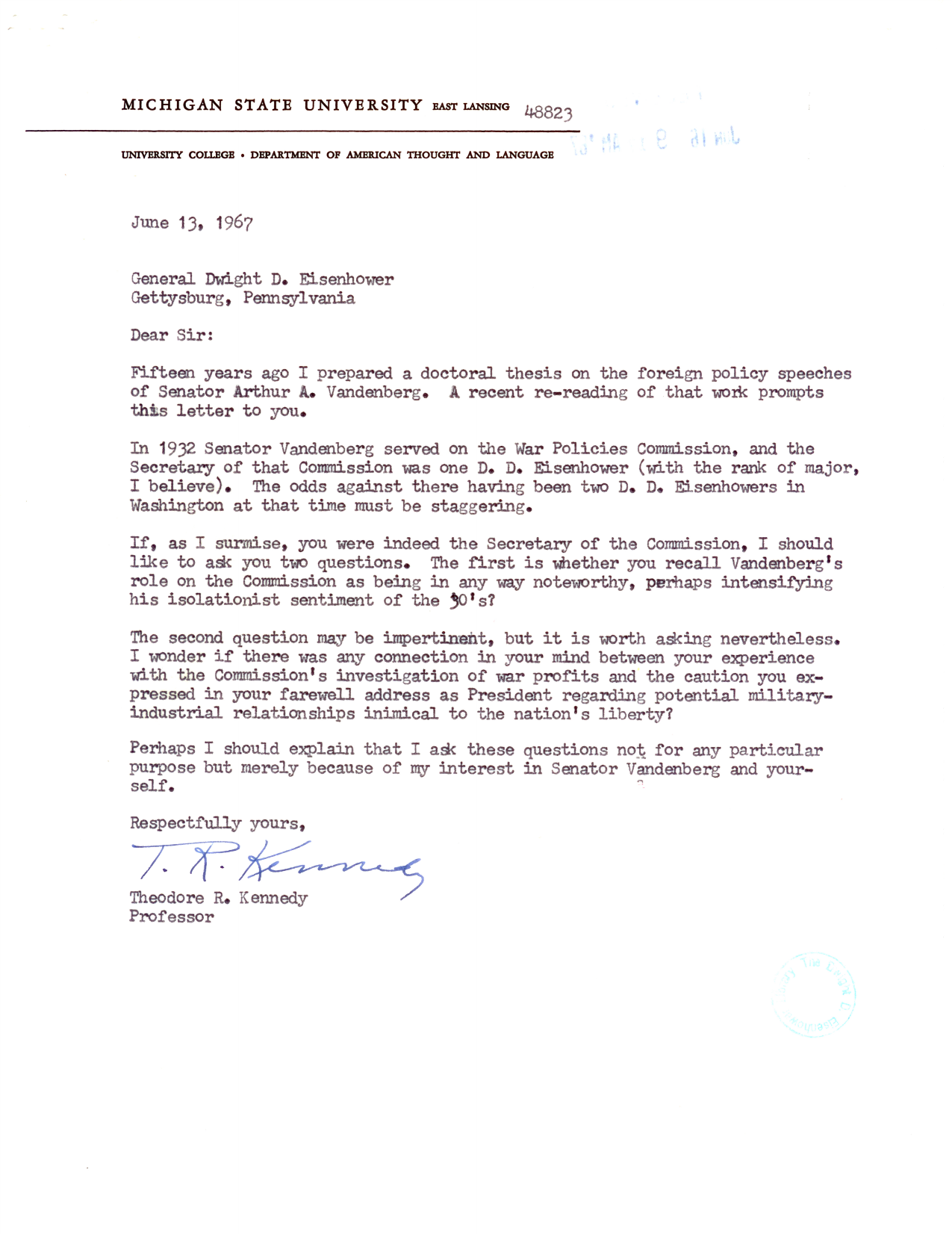
In this June 13, 1967 letter, Michigan State University professor Theodore R. Kennedy writes to former President Dwight D. Eisenhower with questions about Eisenhower’s earlier involvement with the War Policies Commission and whether that experience influenced his later warning about the military-industrial complex. Kennedy explains that his interest grew from research he had conducted on the foreign policy speeches of Senator Arthur A. Vandenberg, who served on the Commission in 1932.
Kennedy first asks Eisenhower to recall Vandenberg’s role on the War Policies Commission and whether the senator’s participation was noteworthy, particularly in strengthening his isolationist views during the early 1930s. His second question connects the Commission’s investigation of war profits to Eisenhower’s famous 1961 Farewell Address. Kennedy asks whether Eisenhower’s experience examining war profits influenced his later concerns about potentially dangerous relationships between the military and industry. He emphasizes that the questions are motivated by his personal scholarly interest in both Vandenberg and Eisenhower rather than a specific research project. The letter is particularly significant when paired with Eisenhower’s June 21, 1967 response, in which the former president directly explained what he meant by the military-industrial complex and distinguished that concern from the issue of wartime profiteering.
Used In These Lessons & Programs
Bring History to Life
Join us for engaging learning experiences designed for young minds.