
Document
Budget Bureau Reviews the Atomic Energy Act of 1954 and Recommends Eisenhower Approve the Legislation
Key Details
Date: August 24, 1954
Created By: Roger Jones
Original or Replica: Original
Era: The Presidency, The Cold War
Collection: Eisenhower Presidential Library
Citations: White House Office, Records Officer Reports to the President on Pending Legislation, Box 40, Appr. 8/30/54; NAID #12023025
About
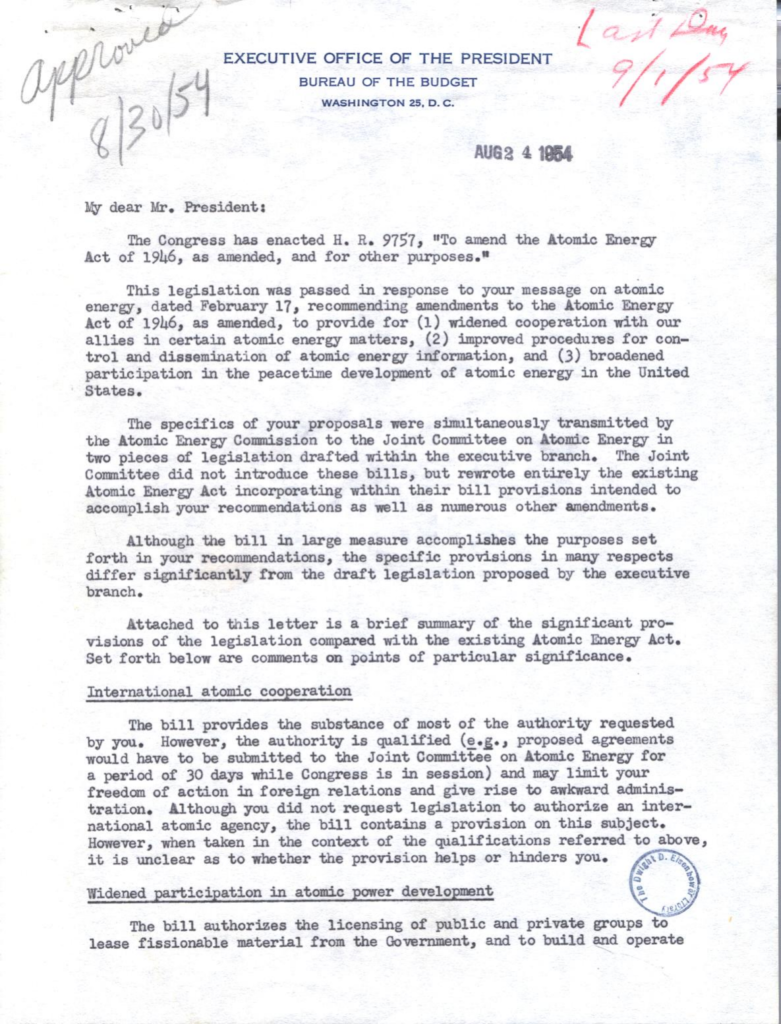
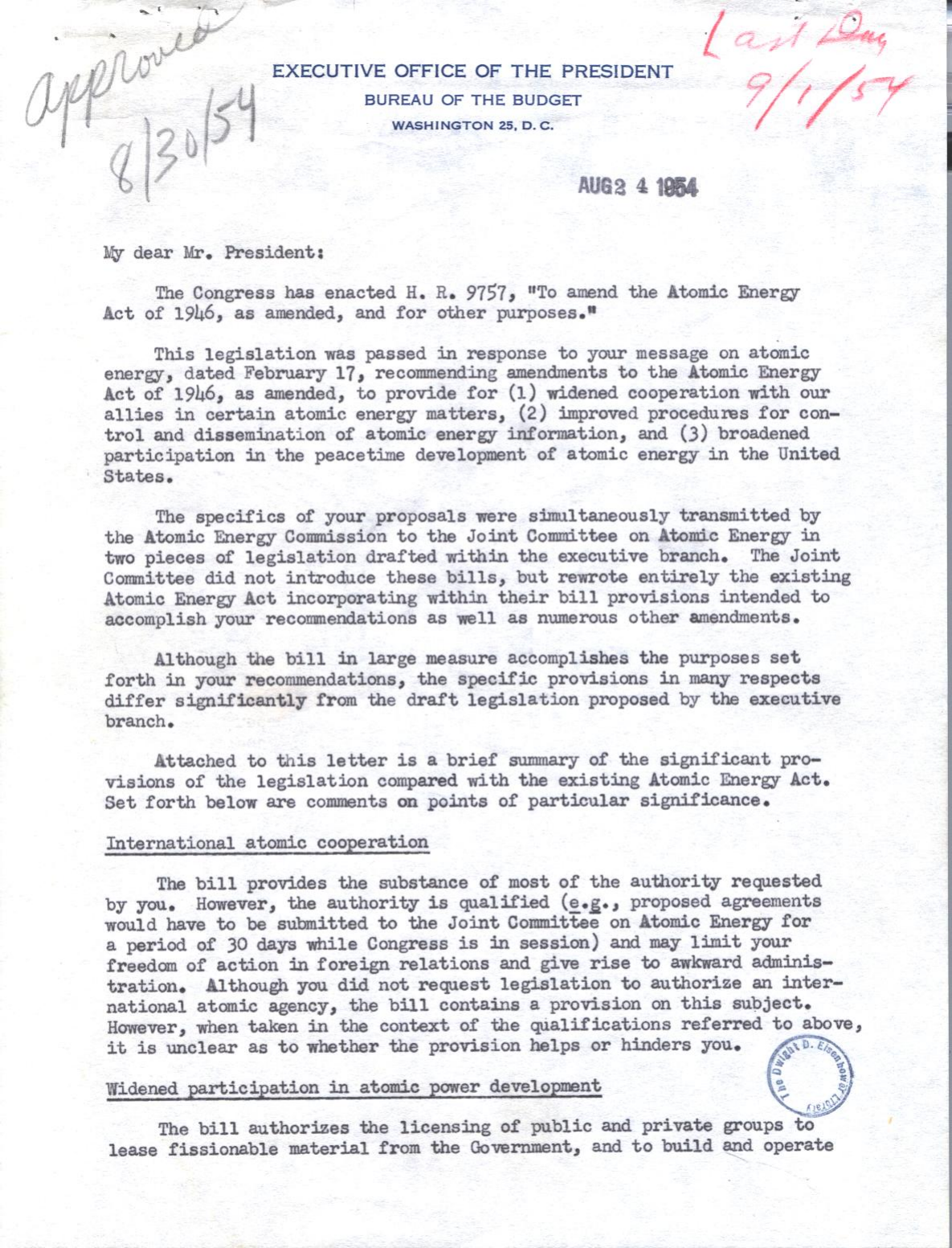
In this August 24, 1954 letter to President Dwight D. Eisenhower, Bureau of the Budget official Roger W. Jones reviews legislation passed by Congress to amend the Atomic Energy Act of 1946. The bill grew out of Eisenhower’s February 1954 recommendations calling for greater atomic cooperation with American allies, improved procedures for controlling and sharing nuclear information, and broader private participation in the peaceful development of atomic energy. Jones explains that although Congress adopted many of Eisenhower’s objectives, the final legislation differed significantly from the administration’s original proposals.
The bill expanded opportunities for international atomic cooperation and permitted private and public organizations to obtain nuclear materials and construct facilities for producing atomic power. However, Jones identifies several concerns, particularly Congress’s refusal to permit private ownership of fissionable material. The Atomic Energy Commission would retain ownership and purchase plutonium produced as a byproduct by private reactors, potentially creating substantial long-term costs for the federal government. The legislation also gave preference in certain circumstances to public agencies and cooperatives seeking access to nuclear-generated electricity.
Jones also discusses provisions governing atomic patents, congressional oversight of the Atomic Energy Commission, construction authorization, AEC organization, and long-term electric power contracts. He notes that some provisions increased the Joint Committee on Atomic Energy’s scrutiny of executive branch decisions and could complicate administration of the nation’s expanding atomic energy program.
Despite these concerns, Jones reports that the Atomic Energy Commission and several executive departments supported the legislation. Although the Bureau of the Budget considered some provisions undesirable, it ultimately recommended that Eisenhower approve the bill.
Used In These Lessons & Programs
Bring History to Life
Join us for engaging learning experiences designed for young minds.