Document
Eisenhower’s Early Plans for His Farewell Address (1959)
Key Details
Date: May 25, 1959
Created By: Dwight D. Eisenhower
Original or Replica: Original
Era: The Presidency, The Cold War
Collection: Eisenhower Presidential Library
Citations: Arthur Larson and Malcolm Moos Records, Box 17, Presidential Speech Planning; NAID #12614784
About
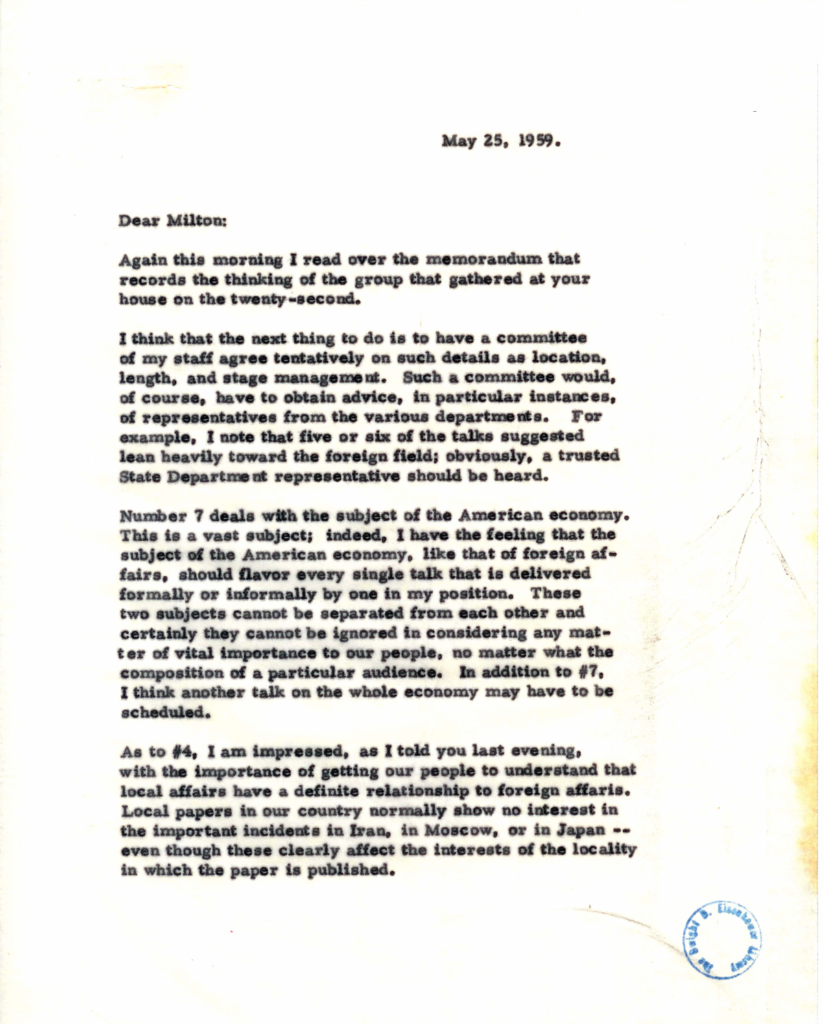
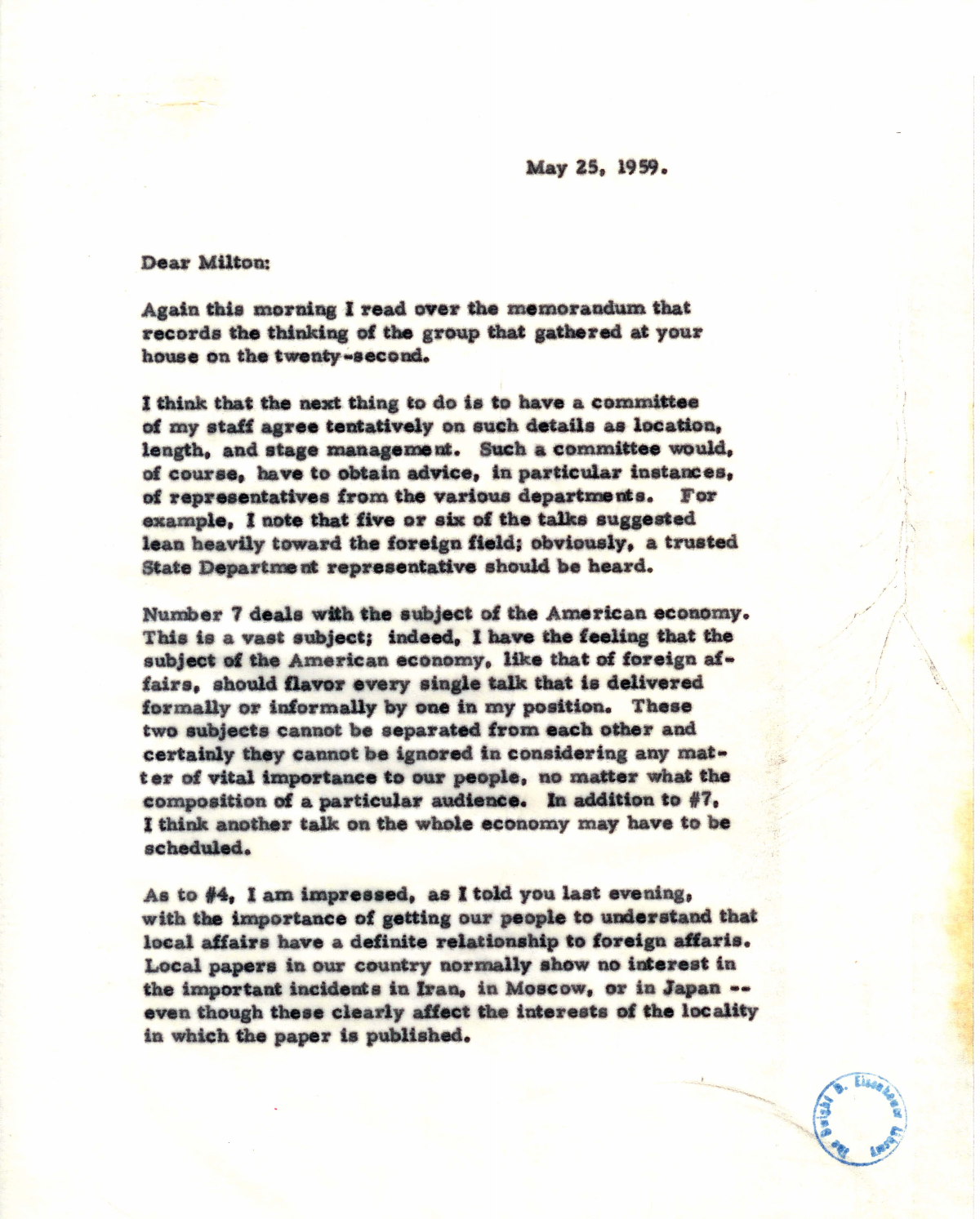
This letter from President Dwight D. Eisenhower to his brother Milton provides insight into Eisenhower’s early thinking about the farewell address he would deliver before leaving office in January 1961. Responding to suggestions from his staff, Eisenhower identifies several subjects he believed his final message should address, including the economy, education, foreign affairs, and the responsibilities of American citizens and government.
Eisenhower particularly emphasizes the growing connection between domestic and international affairs. He argues that events affecting Americans at home—from economic concerns to information reported in local newspapers—could no longer be separated from developments occurring around the world. This relationship between domestic life and America’s global responsibilities was something Eisenhower believed should be emphasized in his final message.
The letter also reveals the personal demands of the presidency. Eisenhower discusses the physical strain associated with presidential travel, motorcades, ceremonies, and other public responsibilities as he considers how his farewell should be delivered.
Finally, Eisenhower stresses that any address before Congress should remain nonpartisan. Despite years of divided government, he wanted his final message to emphasize shared constitutional responsibilities rather than political disagreements. The letter allows students to examine Eisenhower’s developing ideas before his famous Farewell Address and compare these early priorities with the warnings and themes that ultimately appeared in the final speech.
Document(s)
Used In These Lessons & Programs
Bring History to Life
Join us for engaging learning experiences designed for young minds.