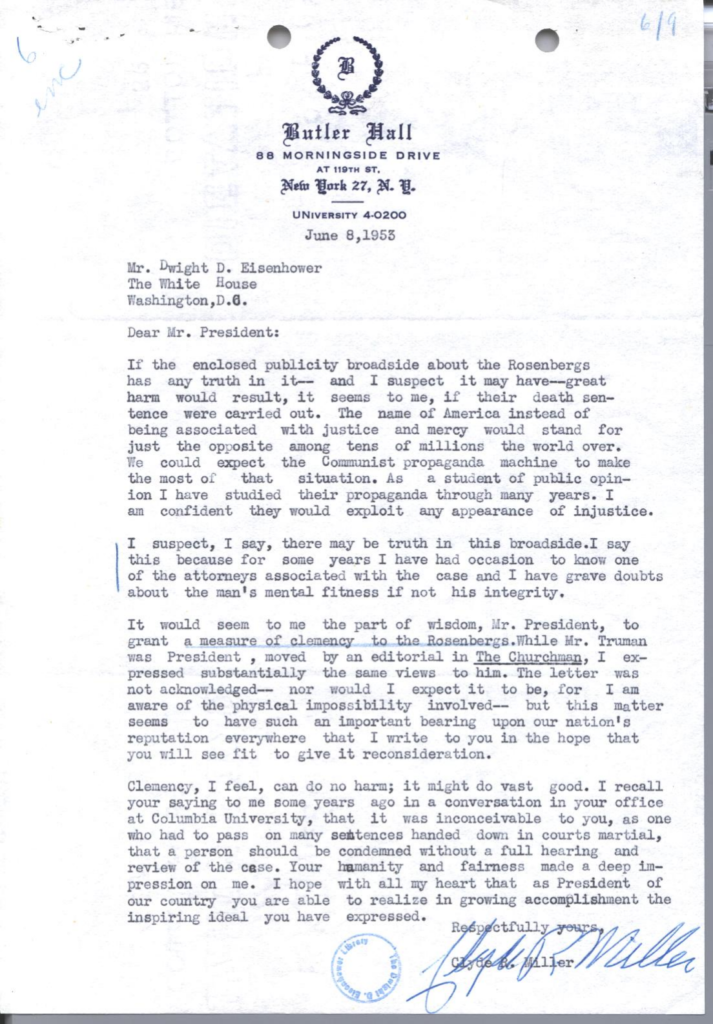
Document
Columbia University Professor Clyde R. Miller Urges Eisenhower to Grant Clemency to Julius and Ethel Rosenberg (1953)
Key Details
Date: June 8, 1953
Created By: Clyde Miller
Original or Replica: Original
Era: The Presidency, The Rosenberg Case
Collection: Eisenhower Presidential Library
Citations: DDE’s Papers as President, Administration Series, Box 32, Rosenberg Case Statement; NAID #12572866
About
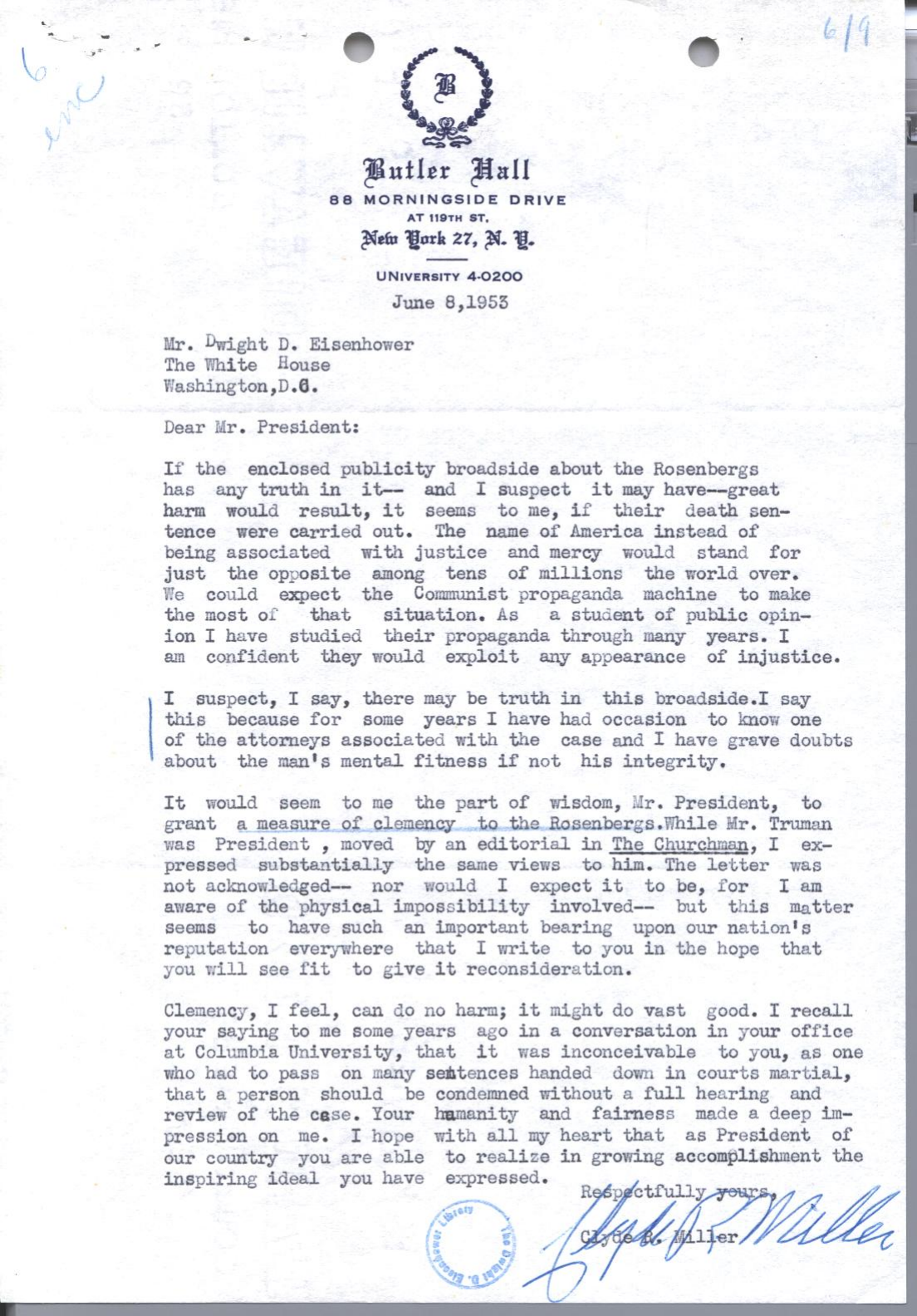
In this June 8, 1953 letter, Clyde R. Miller, a professor at Columbia University, urges President Dwight D. Eisenhower to grant clemency to Julius and Ethel Rosenberg, who were awaiting execution after their convictions for conspiracy to commit espionage. Miller acknowledges that a publicity broadside he had received about the Rosenbergs might contain questionable claims, but argues that carrying out their death sentences could damage the international reputation of the United States. He fears that Communist propaganda would portray the executions as evidence that American claims of justice and mercy were hypocritical.
Miller also expresses personal doubts about aspects of the Rosenberg case, citing concerns about the mental fitness of one of the attorneys involved, although he provides no evidence in the letter to substantiate those concerns. He reminds Eisenhower that former President Harry Truman had also been urged to show clemency and argues that commuting the sentences could do little harm while potentially producing significant benefits for the United States. Miller appeals directly to Eisenhower’s reputation for fairness and humanity, recalling an earlier conversation about the importance of fully reviewing cases before imposing severe punishment. The letter illustrates the domestic and international pressure Eisenhower faced as he considered whether to commute the Rosenbergs’ death sentences.
Used In These Lessons & Programs
Bring History to Life
Join us for engaging learning experiences designed for young minds.