Document
C. D. Jackson Explains the Origins and Development of Eisenhower’s Atoms for Peace Proposal (1955)
Key Details
Date: February 5, 1955
Created By: Merlo Pusey
Original or Replica: Original
Era: The Presidency, The Cold War
Collection: Eisenhower Presidential Library
Citations: C.D. Jackson Papers, Box 29, Atoms for Peace-Evolution (1); NAID #12022916
About
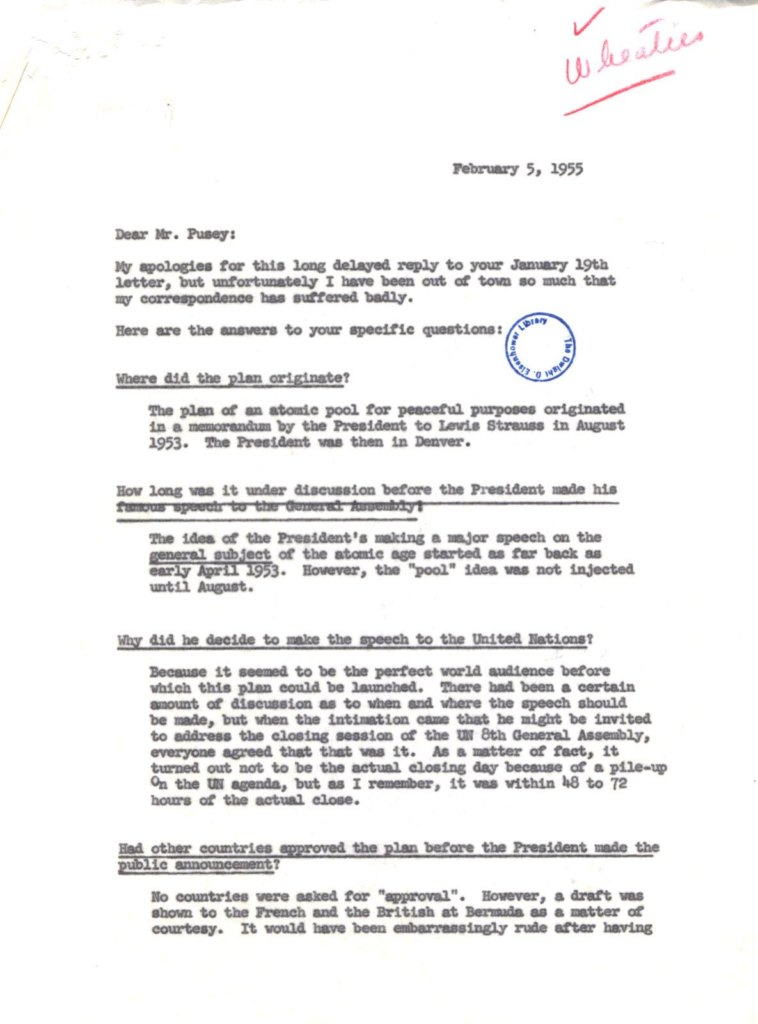
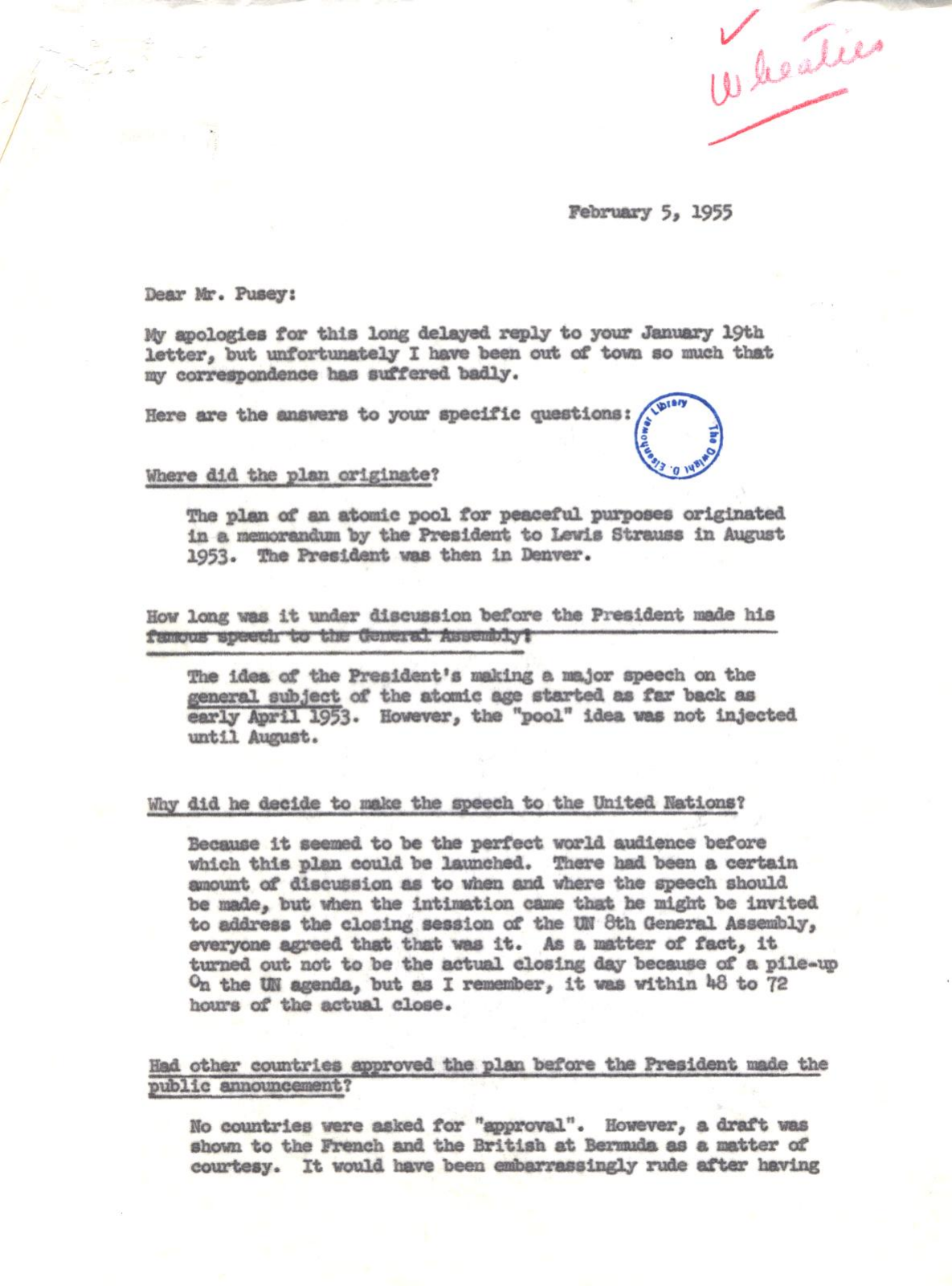
In this February 5, 1955 letter, former Eisenhower adviser C. D. Jackson responds to questions from journalist Merlo J. Pusey about the origins and development of President Dwight D. Eisenhower’s Atoms for Peace proposal. Jackson states that the idea of creating an international atomic pool for peaceful purposes originated with Eisenhower in a memorandum to Lewis Strauss in August 1953. Although discussions about a major presidential speech on the atomic age had begun earlier that year, Jackson explains that the specific “pool” concept emerged in August. He also describes why the administration chose the United Nations General Assembly as the setting for Eisenhower’s December 1953 speech and recalls sharing the draft beforehand with British and French leaders.
Jackson argues that the speech and proposal should receive significant credit in evaluating Eisenhower’s efforts for peace. He emphasizes the proposal’s international impact and describes subsequent United Nations debates over peaceful uses of atomic material. Jackson believed the initiative might ultimately prove far more important than Americans then realized, predicting that future generations could remember Eisenhower’s proposal as the starting point for widespread peaceful applications of atomic energy. He also discusses Soviet criticism and explains how the original concept evolved into the Lodge-Dulles proposal, including changes to how fissionable material would be allocated and administered.
The letter provides a valuable insider’s account of the origins, diplomatic preparation, and long-term goals of Eisenhower’s Atoms for Peace initiative.
Used In These Lessons & Programs
Bring History to Life
Join us for engaging learning experiences designed for young minds.