Document
Eisenhower Reflects on the Supreme Court’s School Desegregation Decision and the Pace of Integration (1956)
Key Details
Date: August 14, 1956
Created By: Dwight D. Eisenhower
Original or Replica: Original
Era: The Presidency, Civil Rights
Collection: Eisenhower Presidential Library
Citations: DDE’s Papers as President, Ann Whitman Diary Series, Box 8, August 1956 Diary (1); NAID #12191456
About
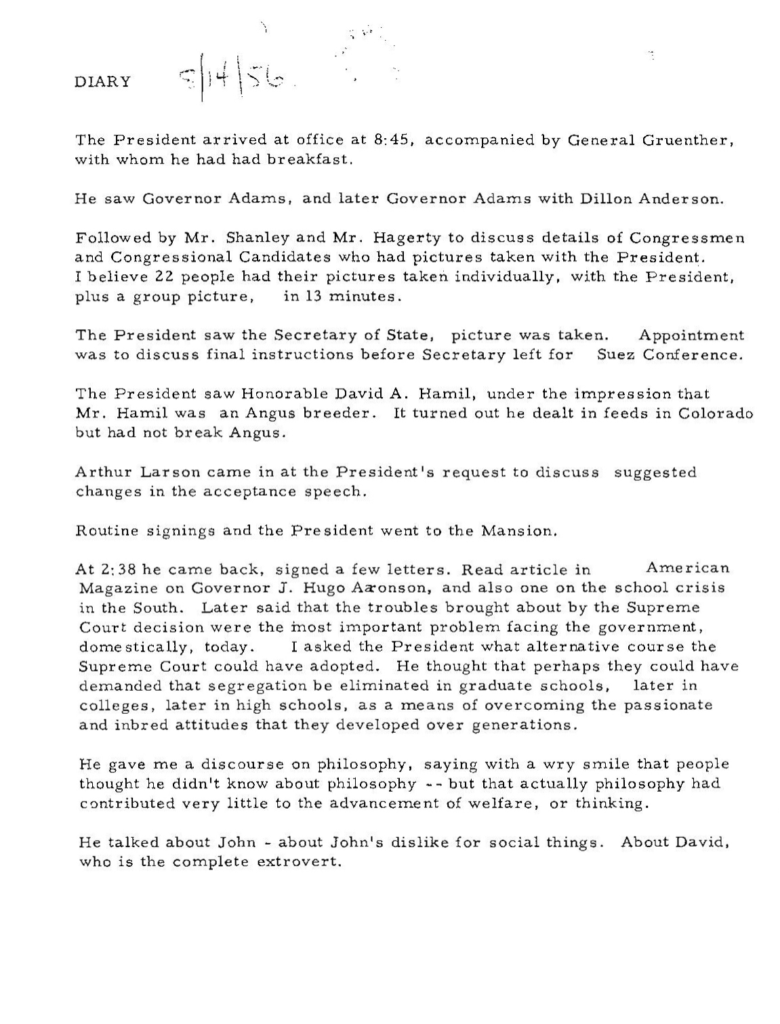
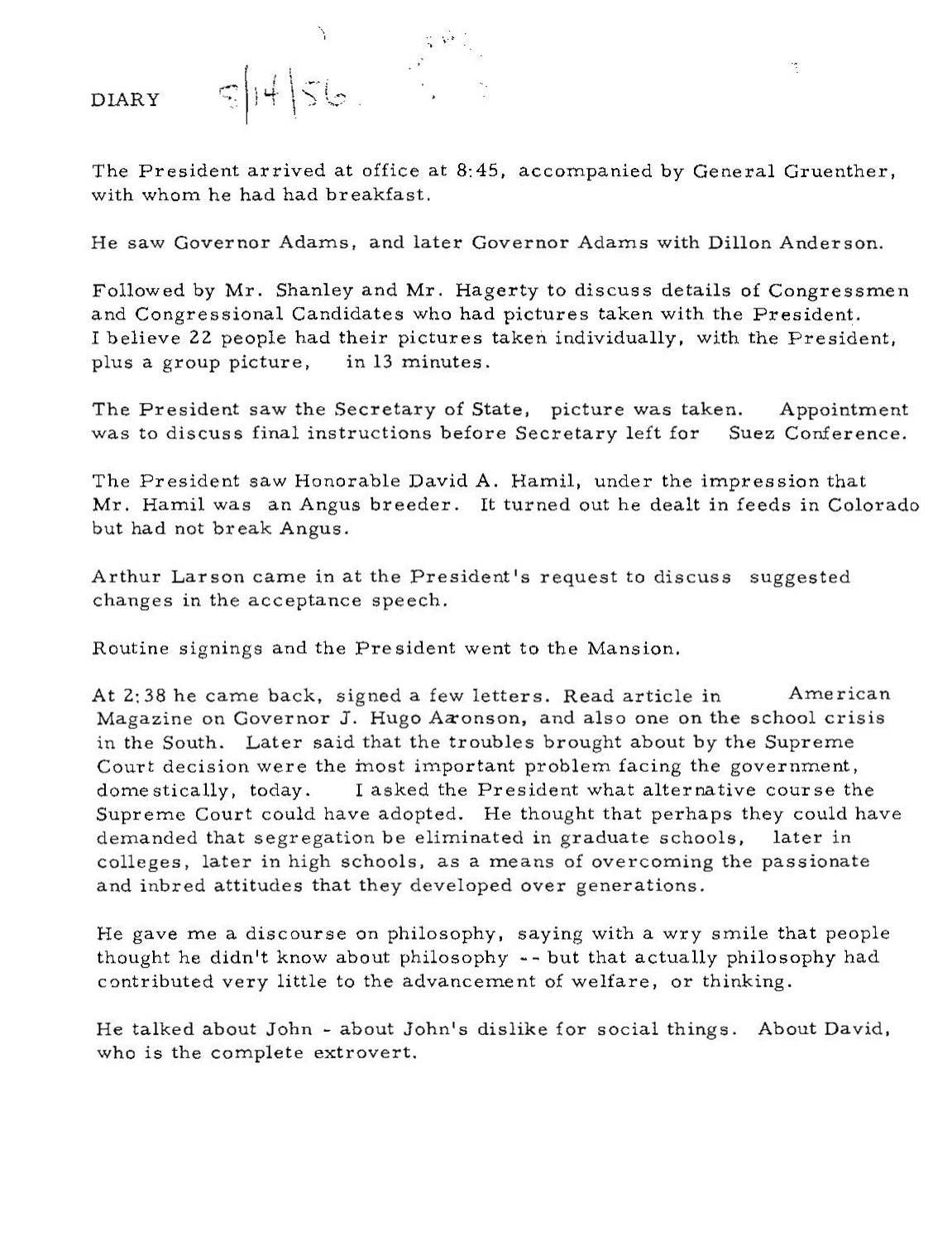
This August 14, 1956 diary entry records President **Dwight D. Eisenhower’s activities and private conversations during a day that included preparations for the developing Suez Crisis, political events surrounding the 1956 election, and a revealing discussion about school desegregation in the South. Eisenhower met with Secretary of State John Foster Dulles to provide final instructions before Dulles departed for the Suez Conference and with Arthur Larson to discuss proposed revisions to Eisenhower’s acceptance speech.
Later that afternoon, Eisenhower read an article concerning the “school crisis in the South.” According to the diary, he described the problems resulting from the Supreme Court’s school desegregation decision as among the most important domestic issues facing the federal government. When asked what alternative approach the Supreme Court might have adopted, Eisenhower suggested that desegregation perhaps could have proceeded more gradually—beginning with graduate schools, followed by colleges, and later high schools. He believed such a process might have allowed racial attitudes and resistance to change over the course of several generations.
The entry is significant because it provides a private glimpse into Eisenhower’s thinking about the implementation of Brown v. Board of Education. Rather than rejecting the principle of desegregation, the comments recorded here focus on the pace and method by which integration should occur, revealing Eisenhower’s concern that rapid implementation could intensify resistance in the South.
The remainder of the entry records a philosophical conversation with the president and personal comments about members of his family. Overall, the document provides a revealing snapshot of Eisenhower’s private thoughts on one of the most difficult civil rights issues confronting his administration.
Document(s)
Used In These Lessons & Programs
Bring History to Life
Join us for engaging learning experiences designed for young minds.