Document
C. D. Jackson Urges Eisenhower to Confront McCarthy and Records Divisions Over National Security Policy (1953)
Key Details
Date: December 2, 1953
Created By: C.D. Jackson
Original or Replica: Original
Era: The Presidency, McCarthyism and the Red Scare
Collection: Eisenhower Presidential Library
Citations: C.D. Jackson Papers, Box 68, Log 1953 (5); NAID #16702996
About
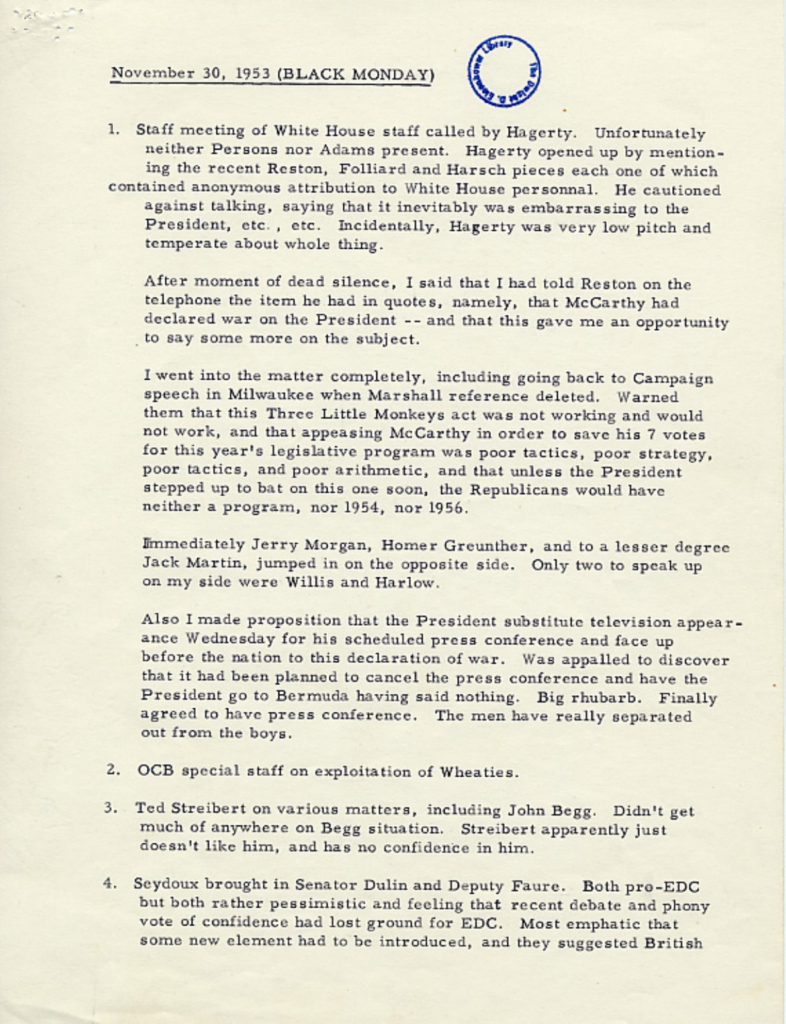
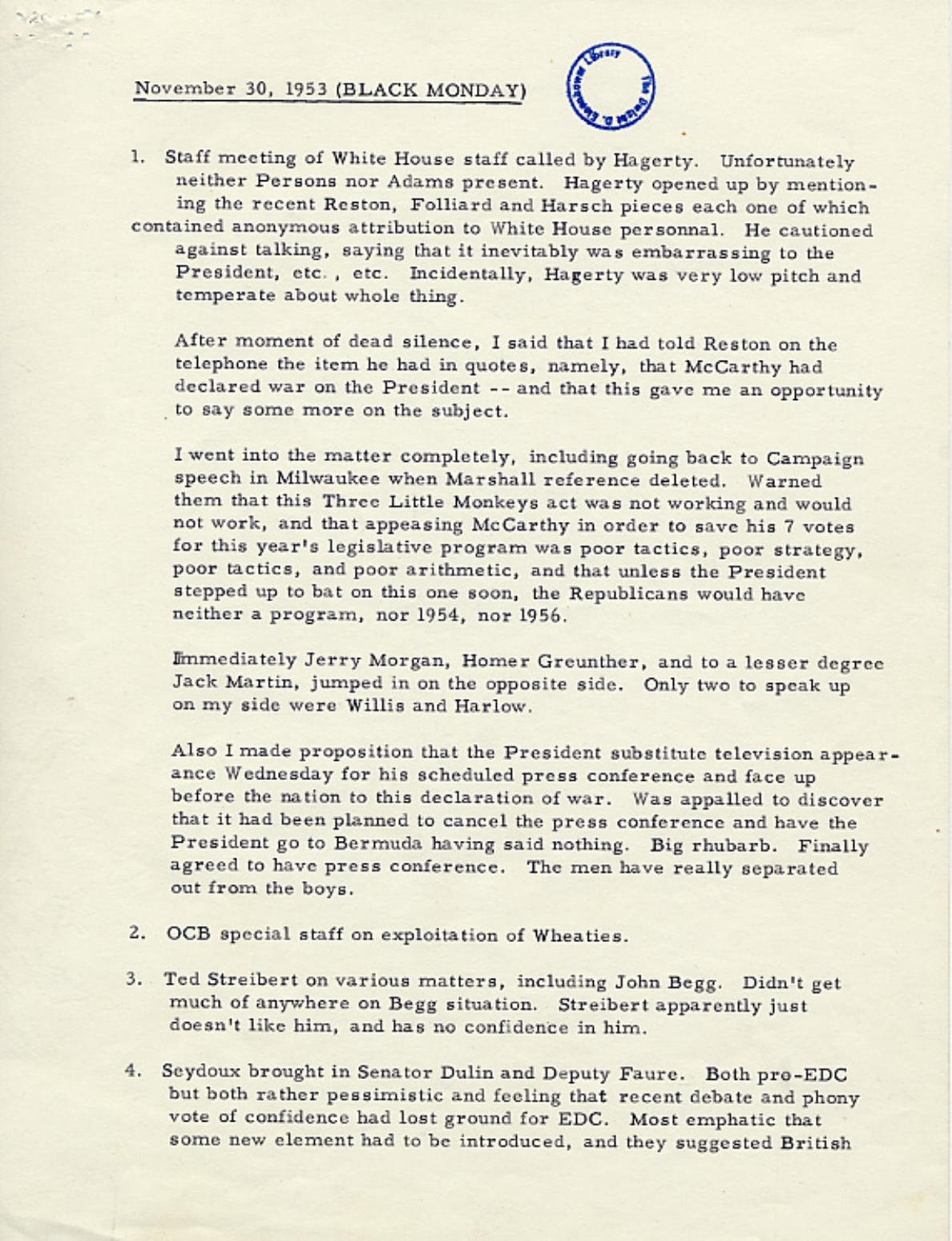
In these November 30, 1953 daily notes, White House adviser C. D. Jackson records a particularly contentious day inside the Eisenhower administration, which he labels “Black Monday.” Jackson describes a White House staff meeting dominated by concerns over Senator Joseph McCarthy’s attacks on President Dwight D. Eisenhower and his administration. Jackson argues that the administration’s existing strategy toward McCarthy was failing and warns that McCarthy’s actions threatened Eisenhower’s legislative program and the Republican Party’s political prospects. He urges Eisenhower to confront McCarthy publicly, even proposing that the president replace a scheduled press conference with a nationally televised appearance responding directly to what Jackson calls McCarthy’s “declaration of war.” Other White House officials strongly disagreed, revealing significant internal divisions over how the administration should handle McCarthy.
Jackson’s notes also describe an equally contentious meeting concerning Project Solarium and the administration’s developing Cold War national security strategy. Participants included Secretary of State John Foster Dulles, CIA Director Allen Dulles, Secretary of Defense Charles Wilson, Joint Chiefs Chairman Arthur Radford, Atomic Energy Commission Chairman Lewis Strauss, and Deputy Defense Secretary Roger Kyes. Jackson portrays the meeting as deeply divided over defense spending, Soviet intentions, and the direction of American policy. He criticizes proposals he believed were inadequate and records his frustration with officials who seemed unwilling to make decisive choices.
The document provides an unusually candid glimpse into internal tensions within the Eisenhower administration over both McCarthyism and Cold War national security policy, revealing the disagreements and frustrations occurring behind closed doors.
Document(s)
Used In These Lessons & Programs
Bring History to Life
Join us for engaging learning experiences designed for young minds.