Document
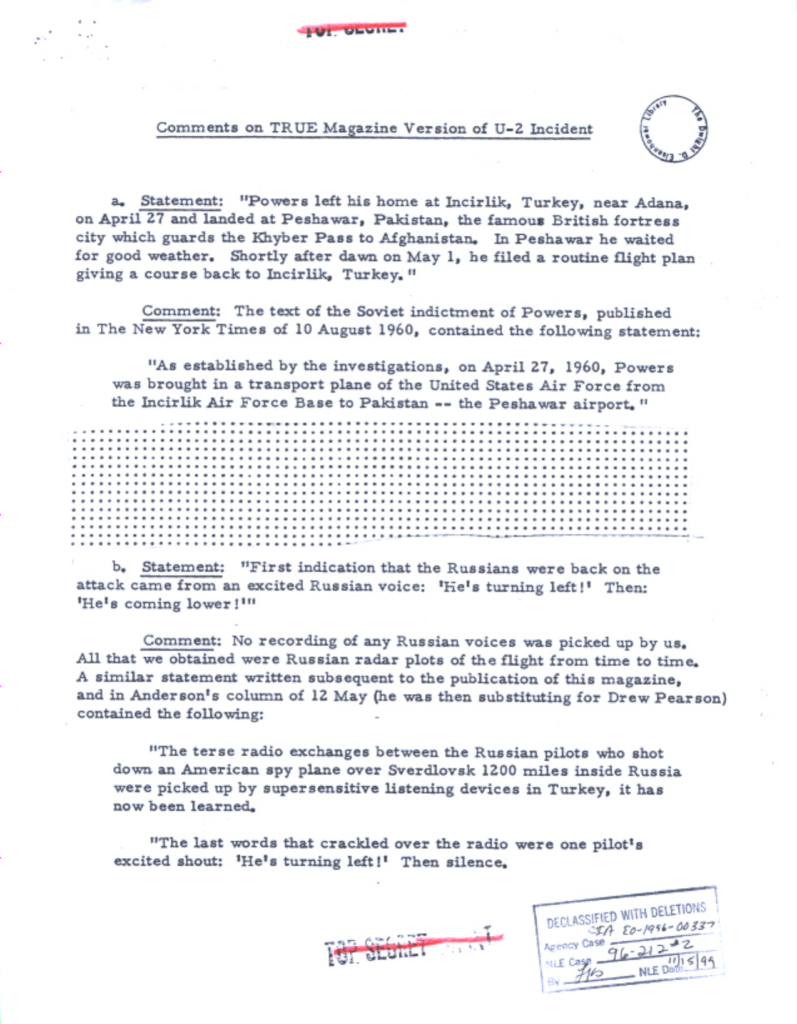
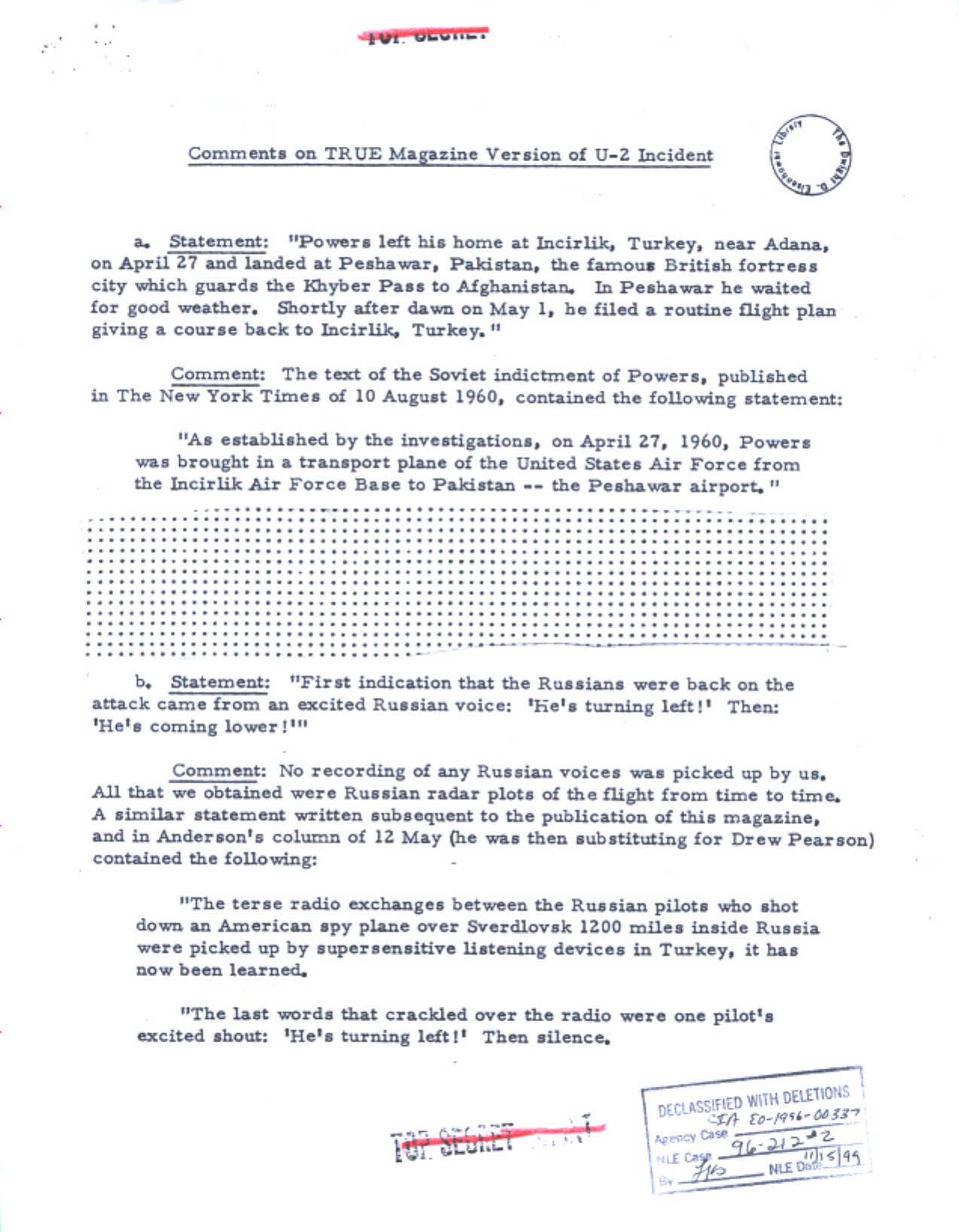
CIA Analysis of TRUE Magazine’s Coverage of the U-2 Incident (1960)
Key Details
Date: September 1960
Created By: U.S. Central Intelligence Agency
Original or Replica: Original
Era: The Presidency, The Cold War
Collection: Eisenhower Presidential Library
Citations: Office of the Staff Secretary, Subject Series, Alphabetical Subseries, Box 15, Intelligence Matters (19); NAID #12010102
About
This document is a classified government analysis prepared in September 1960 reviewing an article published in TRUE Magazine about the 1960 U-2 Incident. Rather than serving as a narrative of the event itself, the document systematically compares the magazine’s claims with information known to the U.S. intelligence community, evaluating which statements were accurate, speculative, or factually incorrect. Originally classified Top Secret, the document was later declassified with deletions.
The analysis examines numerous aspects of the U-2 program, including pilot Francis Gary Powers’ flight to the Soviet Union, the aircraft’s mission and destruction, Soviet interception methods, the pilot’s instructions in the event of capture, and the development and operation of the U-2 reconnaissance aircraft. It also addresses the role of the Central Intelligence Agency (CIA), Lockheed Aircraft Corporation, and NASA in maintaining the U-2 program’s public cover story. Throughout the document, intelligence officials compare published accounts with classified information, identifying where journalists relied on speculation, publicly available information, or details that closely matched classified intelligence.
The U-2 Incident occurred on May 1, 1960, when Francis Gary Powers’ American reconnaissance aircraft was shot down over the Soviet Union, triggering one of the most serious diplomatic crises of the Cold War. This document provides valuable insight into how U.S. intelligence agencies monitored media coverage of sensitive national security issues and sought to assess whether published information revealed classified details about intelligence operations. It also demonstrates the challenges of balancing secrecy, public reporting, and national security during the Cold War.
Used In These Lessons & Programs
Bring History to Life
Join us for engaging learning experiences designed for young minds.