
March 11, 1923 – December 27, 2016
Charles ‘Carlo’ Huyghe
Personal Information
Birthplace: Etterbeek, Belgium
Service Information
Branch of Service: Army
Unit: Belgian Army, Belgian Armed Resistance and the Royal Air Force
Theater of Operation: European
Enlisted / Commissioned: Dec 1, 1939
Discharged: Dec 31, 1945
Highest Rank: Col
Military Honors: Commander Companion of Honour, Croix de Gere Palm and Bar, Croix Militer Palm, Cross Armed Resistance, Cross Leopold III, 3 Palms and Crossed Swords, Cross of Escape, Belgium Commemoration War 1940-1945, French German Star, Polish Resistance Medal, 1939-45 War Medal, Voluntary War Medal, Humanitary Operation Medal Congo, Commander of the Order of Merit, Officer of the Order of Leopold II, Officer of the Order of Leopold I, Knight of the Order of Leopold I, Knight of the Order of the Crown, Holder of National Recognisance (Belgium) for his activities during the War 1940-1945, RAF Veteran badge.
Honored By: MOTHs - Memorable Order of Tin Hats: https://www.moth.org.za/moth-charles-huyghe-answered-sunset-call/
Biography
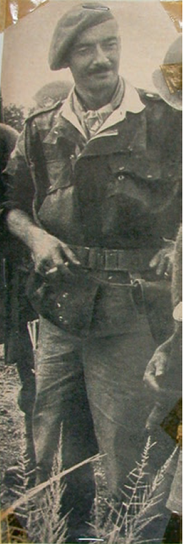
Charles Corneille Gabriel ‘Carlo’ Huyghé (11 March 1923 – 27 December 2016) was a Belgian national who served in the Belgium Army (1939-1940), the Belgian Armed Resistance (1941-1943), the Royal Air Force (1943-1945) and the Belgium Colonial Army (Belgian Congo) (1945-1962). Huyghé was the child of a Walloon father and a Flemish mother. Huyghe’s father was a senior officer in the Belgium army posted in Koblenz, Germany as an area Commander as part of the Versailles treaty regulations. Huyghé spent his early years living in Germany, where he learned the language and his family had made many German friends over the years. During WWII enlisted as a young officer of the Belgian army he was captured during the German Blitzkrieg advancement into Belgium and France. Huyghé became a POW in a camp situated outside Koblenz. After a short period as a prisoner, his knowledge of German gave him certain privileges of freedom and movement, and allowed him to make an escape. He seeked help and refuge from an old German friend of the family. They were concerned of the recriminations that would befall the family by the Nazis if caught harboring a POW therefore they gave him some money and suggested that he should slip onto a Belgian bound train and take his chances on escape. In the early hours of the morning, Huyghé slipped onto a train in the Koblenz station marked for Liege in Belgium. He waited in a compartment for travelers to arrive. The train turned out to be a troop train transporting an SS Battalion to Liege. During the trip, two SS Officers moved into his compartment. With his knowledge of German and armed with a story of being a migrant worker, the two officers took a liking to Huyghé and shared their rations (and Schnapps) with him on the journey home. Standard train and papers searches fell outside the realms of an SS troop train and the young man made it safely to Liege. Charles spent the next few years fighting with the Belgian resistance and then escaped to Britain where he joined the RAF and operated as a tail gunner on Lancaster bombers.
Explore More of Ike’s Soldiers


Get Involved
Learn, visit, and support The Eisenhower Foundation through programs, tours, and philanthropy.