
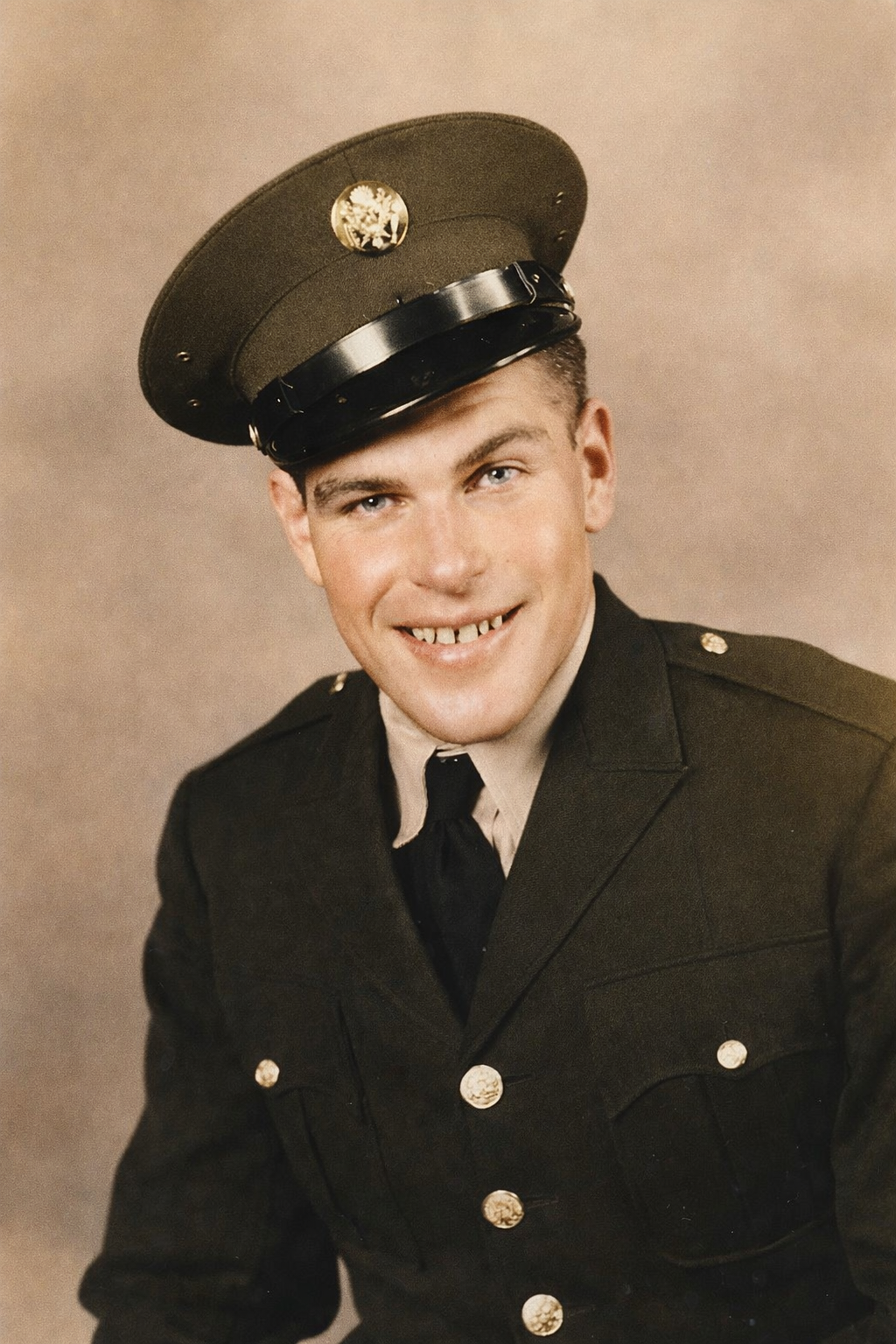
April 10, 1921 – September 15, 1955
Richard Fiebiger
Personal Information
Birthplace: Aneta, North Dakota
Hometown: Jessie, North Dakota
Service Information
Branch of Service: Army
Unit: Company M, 378th Infantry Regiment, 95th Infantry Division
Theater of Operation: European
Battle: Rhineland
Enlisted / Commissioned: 07/01/1942
Discharged: 10/08/1945
Highest Rank: Sergeant
Military Honors: Bronze Star Medal (2 awards), Purple Heart, Combat Infantryman Badge, Good Conduct Medal, European-African-Middle Eastern Campaign Medal with 3 Bronze Service Stars
Honored By: Peggy Peterson (daughter) & Gage Sitte (great-grandson)
Biography
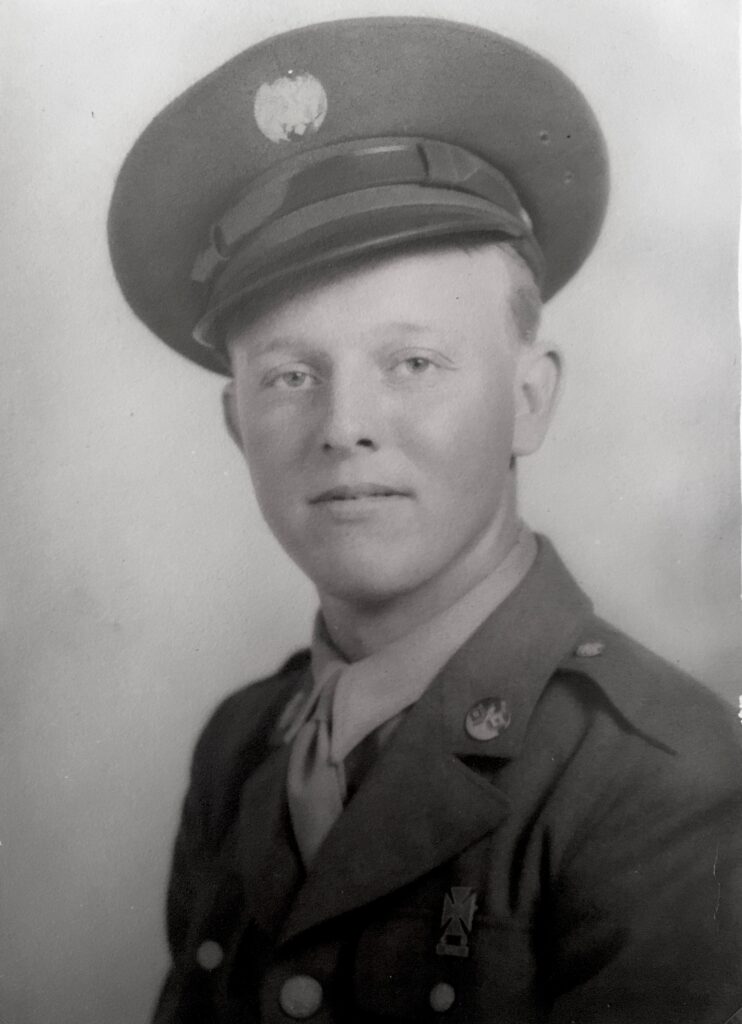
Richard Fred Fiebiger was born on April 10, 1921, in Aneta, North Dakota. Raised on the northern plains, he worked as a cash-grain farmer before answering his nation’s call to military service during World War II. He was inducted into the United States Army on July 1, 1942, and entered active duty at Fort Snelling, Minnesota, on July 14, 1942.
Following more than two years of intensive stateside training, Fiebiger attained the rank of Sergeant and served as an Infantry Squad Leader (Military Occupational Specialty 605) with Company M, 378th Infantry Regiment, 95th Infantry Division. Company M was the heavy-weapons company of the regiment’s 3rd Battalion, providing machine-gun and 81-mm mortar support to frontline rifle companies during combat operations.
In August 1944, Sergeant Fiebiger deployed to the European Theater of Operations as part of the 95th Infantry Division. During his overseas service, he served under General George S. Patton Jr.’s Third United States Army, whose rapid offensive operations helped drive Allied forces across France and into Germany. Serving within XX Corps under Major General Walton H. Walker, the 95th Infantry Division earned a distinguished reputation for its effectiveness in combat.
Sergeant Fiebiger participated in three officially recognized World War II campaigns—Northern France, Rhineland, and Central Europe. As a member of the 378th Infantry Regiment, he fought in the fierce Battle of Metz, where the 95th Infantry Division played a decisive role in capturing one of Nazi Germany’s strongest fortified cities. The division’s extraordinary performance during the campaign earned it the enduring nickname “The Iron Men of Metz.” He later participated in the advance toward the Saar River and the Allied assault against Germany’s formidable Siegfried (West Wall) Line.
On January 4, 1945, Sergeant Fiebiger was wounded in action while serving on the front lines in the European Theater. For wounds received in combat against enemy forces, he was awarded the Purple Heart. His military record also includes the Combat Infantryman Badge, recognizing his active participation in ground combat as an infantryman.
His distinguished military service was further recognized with the Bronze Star Medal with One Oak Leaf Cluster (representing two awards of the Bronze Star Medal), the Good Conduct Medal, and the European-African-Middle Eastern Campaign Medal with three bronze service stars for his participation in the Northern France, Rhineland, and Central Europe campaigns.
Following the Allied victory in Europe, Sergeant Fiebiger returned home to North Dakota. In 1947, he married Moralen Dahl. The couple established their home on a farm near Jessie, North Dakota. Together, Richard and Moralen raised four children; Connie, Peggy, Ronnie.
Tragically, Richard’s life was cut short on September 15, 1955, when he was killed in an automobile collision caused by a drunk driver. He was only 34 years old. After surviving the brutal battlefields of Europe and the fierce fighting against Nazi tyranny that earned the 95th Infantry Division its distinguished place in military history, his life was ultimately taken at home because of another person’s reckless decision.
Sergeant Richard Fred Fiebiger left an enduring legacy of service and sacrifice. He answered his country’s call during one of history’s greatest crises, led American soldiers in combat, was wounded while fighting for freedom, and returned home to build a family and contribute to his community as a North Dakota farmer. Today, he is remembered as a decorated World War II combat veteran, a devoted husband and father, a hardworking farmer, and a proud member of the 95th Infantry Division—”The Iron Men of Metz.”
Explore More of Ike’s Soldiers


Get Involved
Learn, visit, and support The Eisenhower Foundation through programs, tours, and philanthropy.