Document
Allied Leaders Develop Operation Bodyguard to Deceive Germany About the Location and Timing of the D-Day Invasion (1943)
Key Details
Date: December 25, 1943
Created By: Chiefs of Staff Committee
Original or Replica: Original
Era: The General, D-Day and the Normandy Invasion
Collection: Eisenhower Presidential Library
Citations: Eisenhower Presidential Library and Museum
About
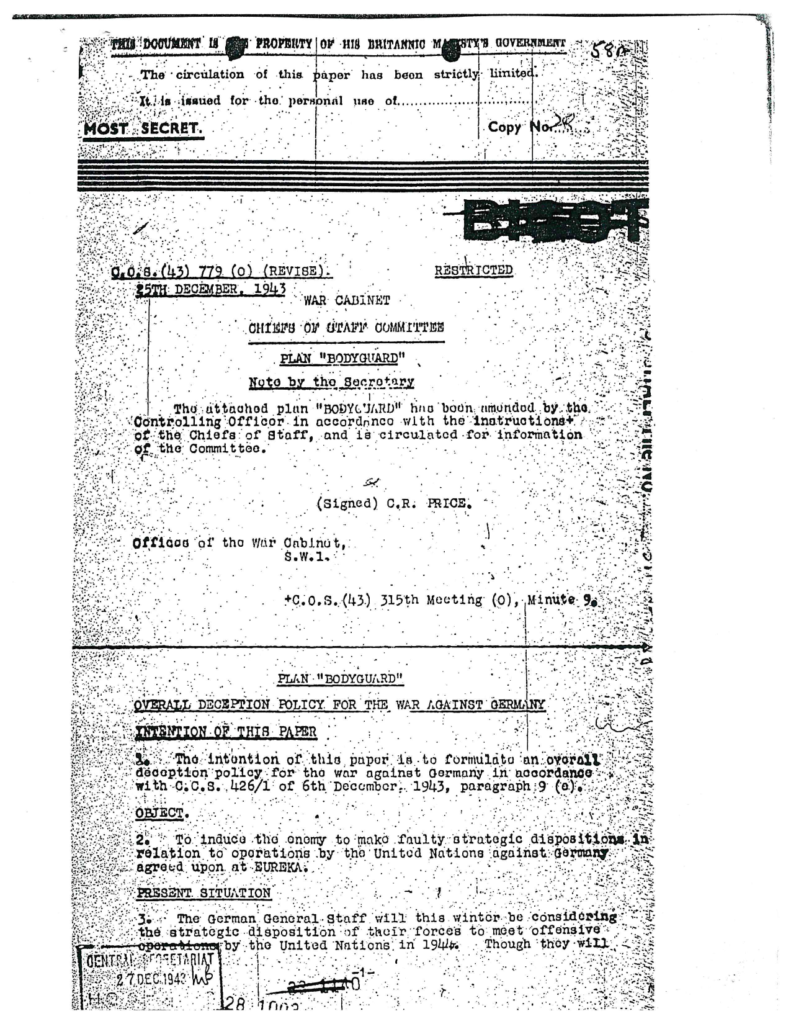
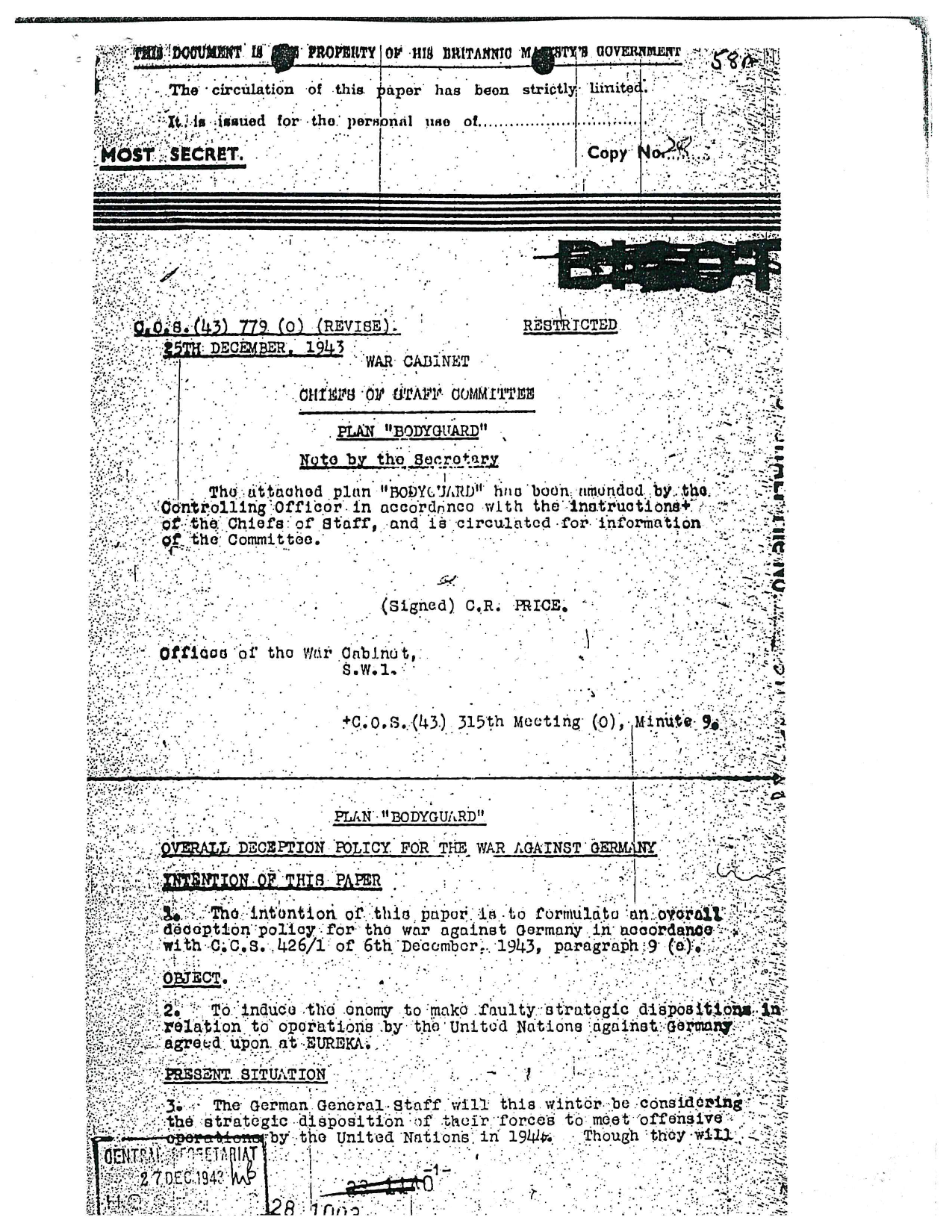
This December 25, 1943 British War Cabinet Chiefs of Staff document outlines Operation Bodyguard, the Allies’ overall deception strategy for military operations against Germany in 1944. Its central objective was to persuade German leaders to make incorrect strategic decisions about where and when the Allies intended to attack. With preparations underway for Operation Overlord, the planned cross-Channel invasion of France, Allied planners recognized that deception could help prevent Germany from concentrating its forces against the actual invasion.
The plan called for convincing Germany that Allied offensives might occur in several different locations. Possible threats included attacks against Norway, the Balkans, southern France, and other parts of the Mediterranean, while continued operations in Italy would reinforce the impression that major Allied resources remained committed there. The deception strategy also sought to mislead Germany about Allied troop strength, amphibious capabilities, and military preparations. These false threats were intended to force Germany to disperse its limited forces across Europe rather than concentrate them where they could interfere with Overlord.
The document emphasizes that tactical deception surrounding Overlord would be especially important. German commanders were to remain uncertain about the timing, direction, and strength of the cross-Channel attack. Bodyguard would employ military movements, diplomatic activity, rumors, propaganda, and other deceptive measures while maintaining strict security to conceal the true preparations for Overlord.
The plan provides an important look at the large-scale Allied deception strategy designed to confuse German commanders, disperse German forces, and improve the chances of success for the coming D-Day invasion.
Used In These Lessons & Programs
Bring History to Life
Join us for engaging learning experiences designed for young minds.