Document
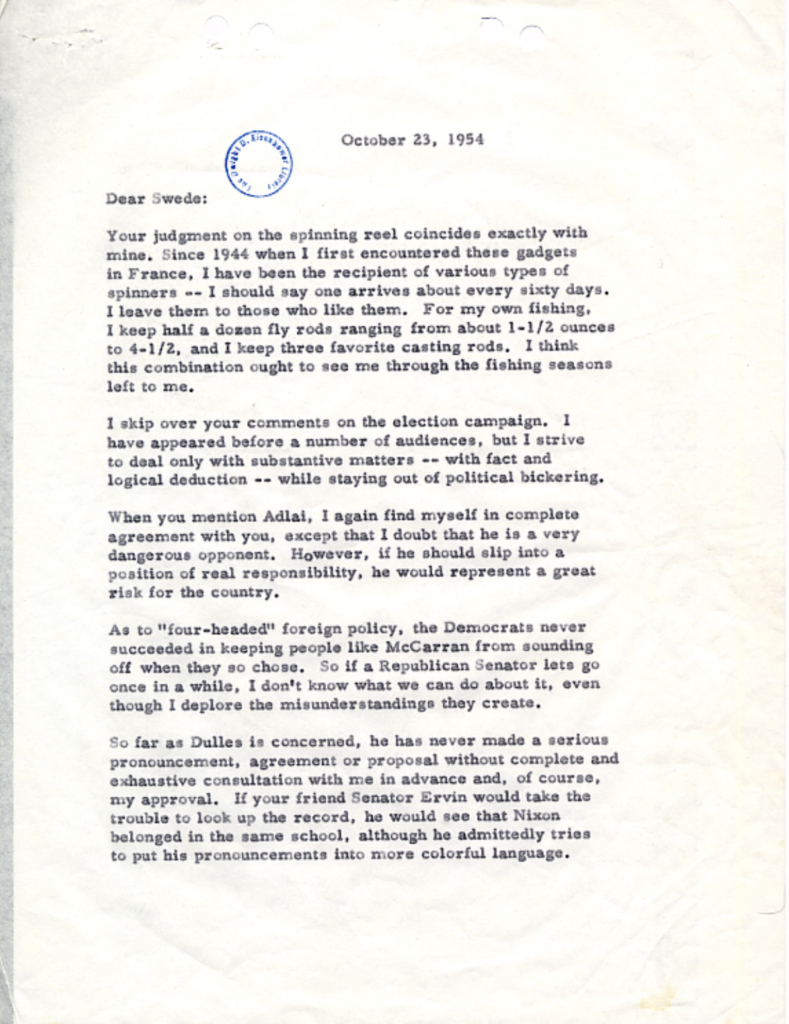
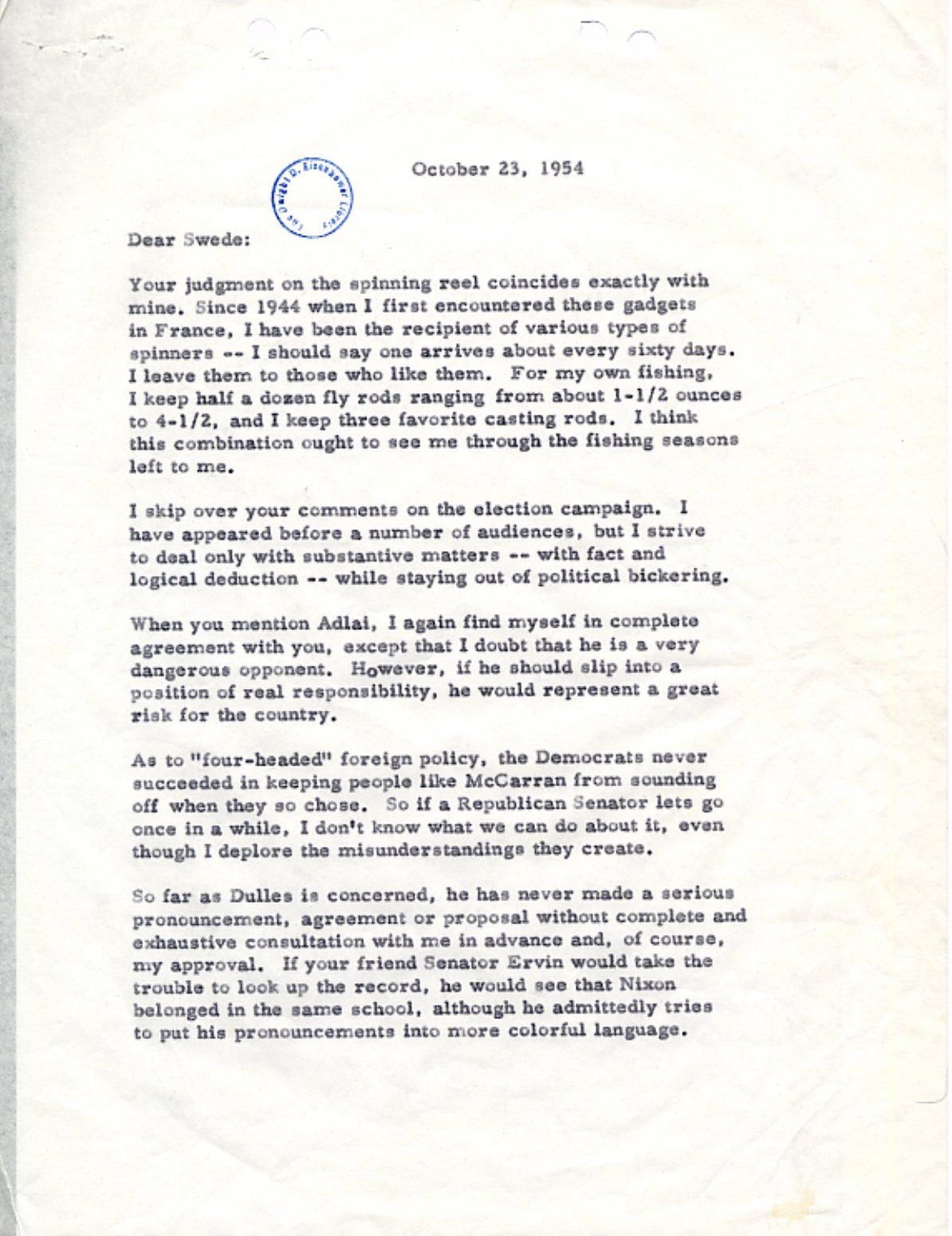
Eisenhower Reflects on Foreign Policy, Civil Rights, and His Frustrations with Congress in a Personal Letter to Edward “Swede” Hazlett (1957)
Key Details
Date: July 22, 1957
Created By: Dwight D. Eisenhower
Original or Replica: Original
Era: The Presidency, Civil Rights, The Cold War, Elections and Politics
Collection: Eisenhower Presidential Library
Citations: Swede Hazlett Papers, Box 2, 1957 July 22; NAID #12171154
About
In this personal July 22, 1957 letter to longtime friend Edward “Swede” Hazlett, President Dwight D. Eisenhower offers unusually candid reflections on several major issues confronting his administration. Eisenhower expresses frustration with members of Congress whom he believed placed reelection and local political interests above the nation’s long-term needs. He defends foreign aid and mutual security programs as essential to strengthening American alliances, expanding overseas markets, and containing Communism, arguing that American security depended upon cooperation with other nations rather than isolationism.
Eisenhower then turns to civil rights and school desegregation, discussing the Supreme Court’s 1954 decision overturning school segregation. He argues that decades of legally sanctioned segregation could not be reversed immediately, but insists that Americans must respect the Constitution and the Supreme Court’s authority. He supports a gradual but effective approach combining legal requirements with education to achieve integration. The letter concludes with Eisenhower’s concerns about inflation and federal spending, including criticism of congressional decisions he believed were motivated by electoral politics. The document provides a revealing glimpse into Eisenhower’s private thinking about Cold War foreign policy, civil rights, constitutional government, economic policy, and the political pressures of the presidency.
Used In These Lessons & Programs
Bring History to Life
Join us for engaging learning experiences designed for young minds.