Document
General J. Lawton Collins Describes the Battle of the Bulge and the Decision to Counterattack German Forces (1945)
Key Details
Date: January 16, 1945
Created By: Lawton Collins
Original or Replica: Original
Era: The General, The Ardennes Offensive
Collection: Eisenhower Presidential Library
Citations: J. Lawton Collins Papers, Box 3, 201 File–Personal Letter File–1945 (4); NAID #12113405
About
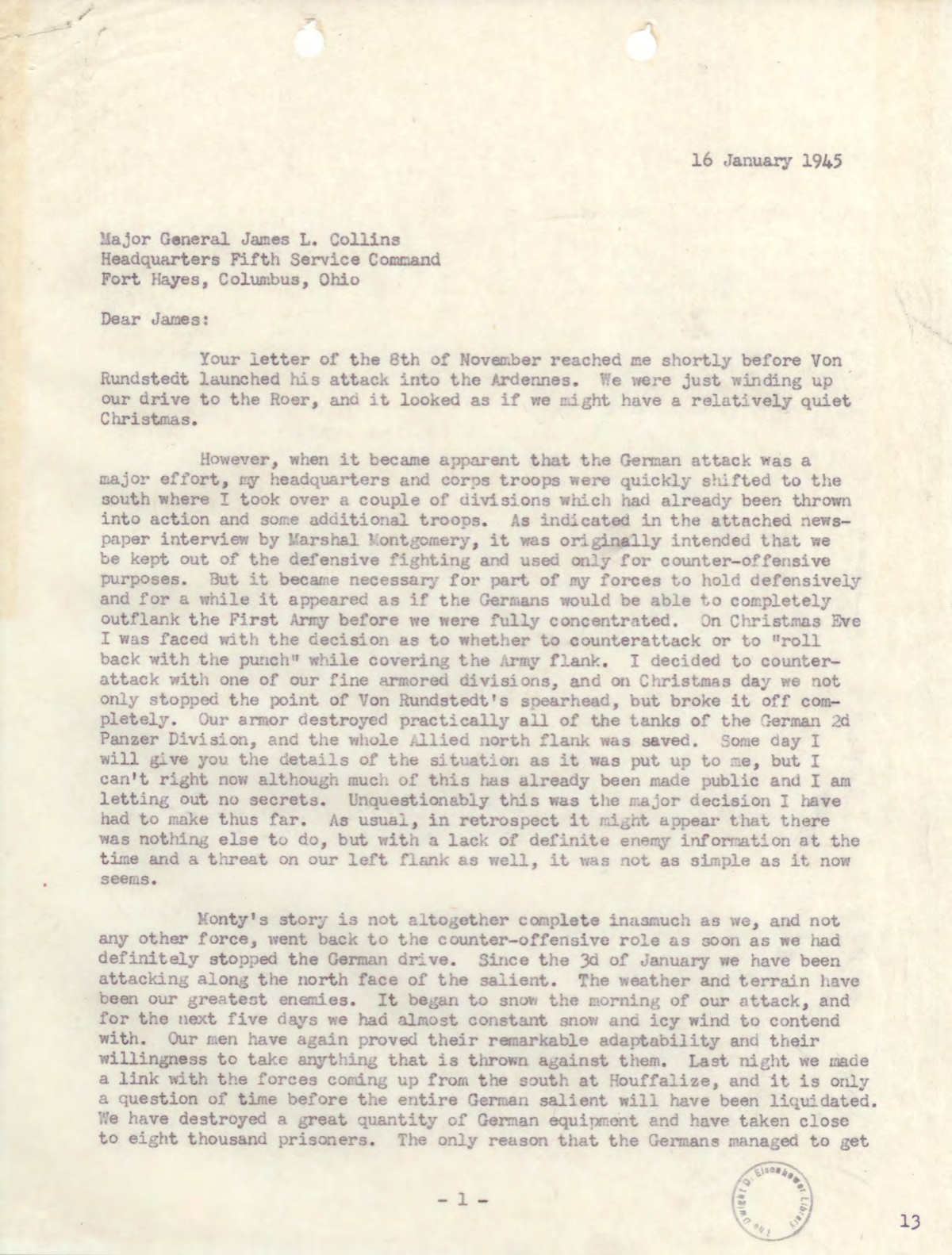
In this January 16, 1945 letter, Major General J. Lawton Collins, commander of the U.S. VII Corps, writes to his brother, Major General James L. Collins, about his experiences during the Battle of the Bulge. Collins recalls how preparations for an Allied advance toward the Roer were abruptly interrupted when Field Marshal Gerd von Rundstedt’s forces launched their surprise offensive through the Ardennes. As the seriousness of the German attack became clear, Collins shifted his headquarters and available forces south to reinforce the threatened American position. On Christmas Eve, he faced what he describes as perhaps the most important decision he had made during the war: whether to remain on the defensive or launch a counterattack. He chose to attack, helping stop the German advance and contributing to the destruction of much of the 2nd Panzer Division.
Collins also discusses his relationship with British Field Marshal Bernard Montgomery, praising his abilities while observing that Montgomery was generally more cautious than General Omar Bradley. He emphasizes the importance of American resistance at Bastogne and credits General Troy Middleton with playing a major role in defeating the German offensive. By mid-January, Collins reports that Allied forces were steadily eliminating the German salient despite severe winter weather.
The letter is particularly valuable because it combines a senior commander’s firsthand description of battlefield decision-making during the Battle of the Bulge with candid personal observations about other Allied commanders and the challenges of fighting Germany’s final major offensive in the West.
Used In These Lessons & Programs

Bring History to Life
Join us for engaging learning experiences designed for young minds.