Document
Parents Challenge Racial Segregation in Topeka Public Schools in Brown v. Board of Education (1951)
Key Details
Date: February 26, 1951
Created By: Chad E. Bledsoe
Original or Replica: Original
Era: Civil Rights, The Presidency
Collection: Eisenhower Presidential Library
Citations: U.S. District Court, District of Kansas, Brown v Board of Education, Box 1, Documents 1-23
About
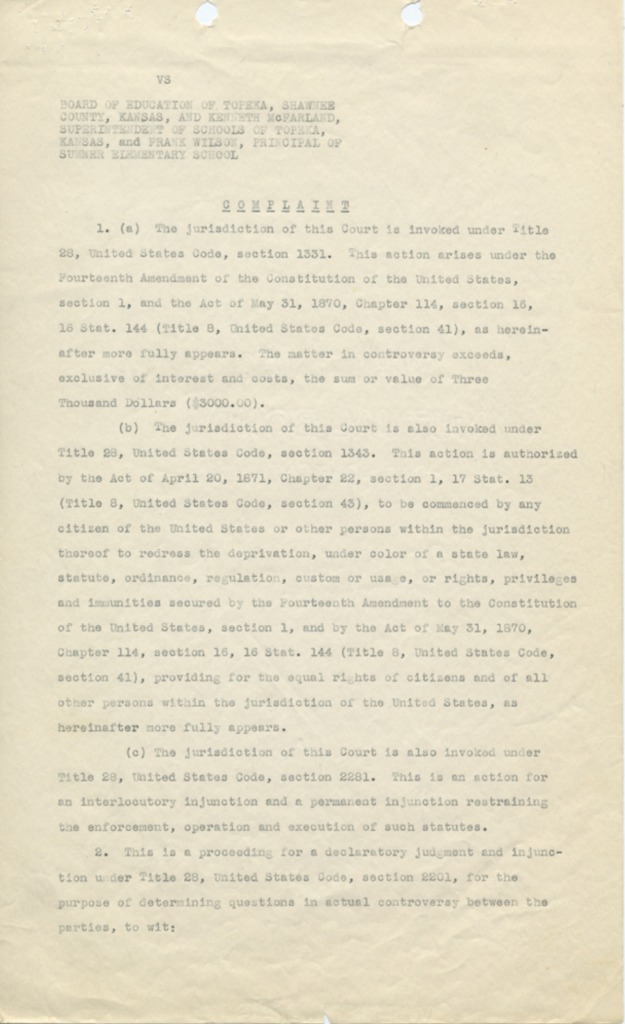
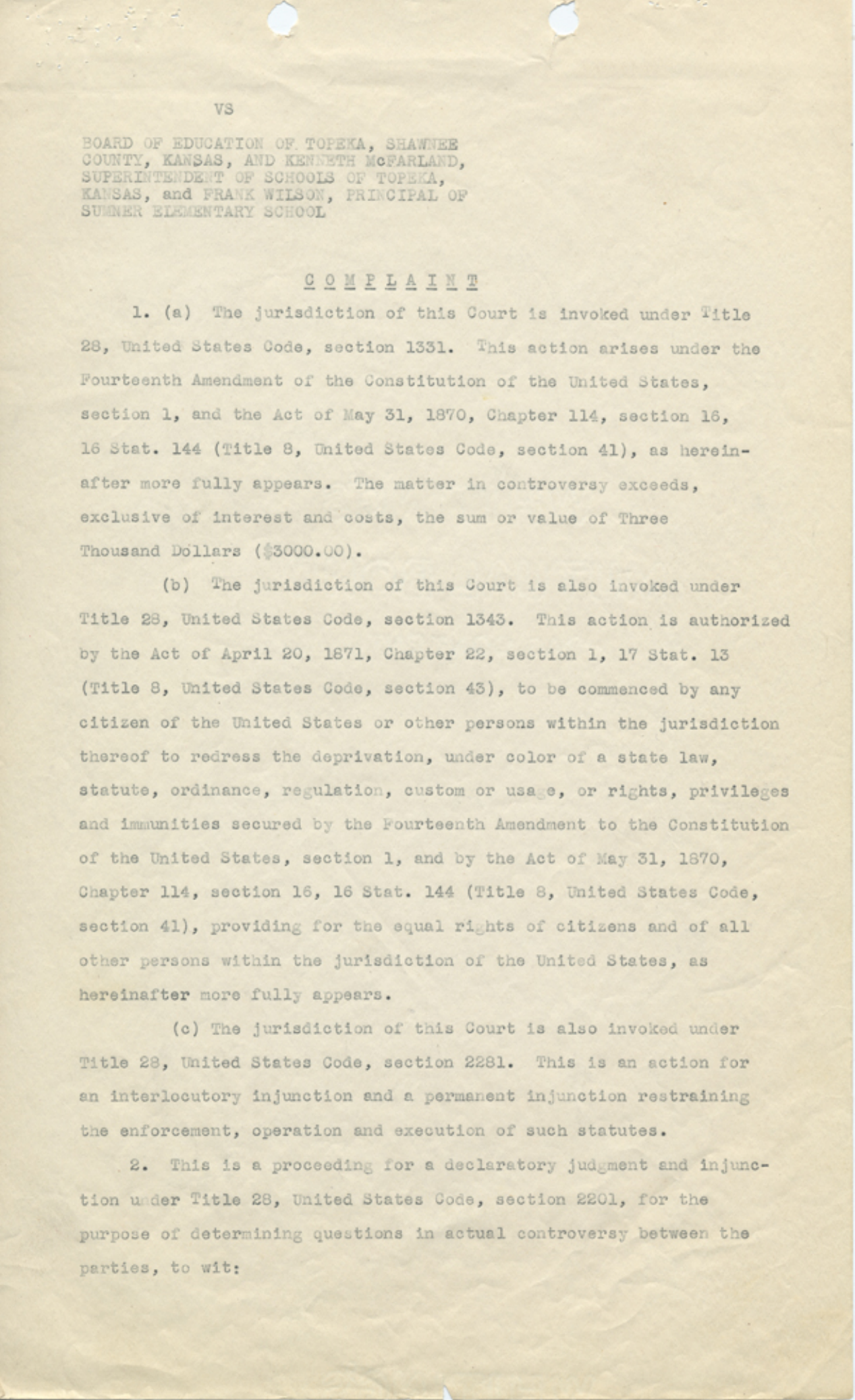
This February 26, 1951 legal complaint challenges the operation of racially segregated elementary schools in Topeka, Kansas, and became the foundation of the case that would ultimately reach the Supreme Court as Brown v. Board of Education of Topeka. Filed on behalf of Black schoolchildren and their parents, the complaint argues that Kansas law and the practices of the Topeka Board of Education violated the Fourteenth Amendment’s Equal Protection Clause by permitting separate schools for Black and white children. The plaintiffs state that Black children were denied admission to schools within their own neighborhoods solely because of their race and were instead required to attend designated segregated schools.
The complaint emphasizes the practical inequalities created by segregation. It argues that Black students were forced to travel significant distances outside their school districts and faced additional physical hazards while white children could attend nearby neighborhood schools. The plaintiffs maintain that these conditions denied Black children educational opportunities equal to those provided to similarly situated white students and imposed additional burdens on their parents.
The plaintiffs ask the federal court to declare Kansas laws permitting segregated schools unconstitutional and to permanently prevent Topeka school officials from denying Black children access to neighborhood schools because of race. The document provides students with a valuable look at the constitutional arguments and specific inequalities that formed the legal foundation of Brown v. Board of Education, three years before the Supreme Court’s landmark 1954 decision.
Used In These Lessons & Programs
Bring History to Life
Join us for engaging learning experiences designed for young minds.